covid-test-accuracy-for-eg5-and-ba286-variantscovid-test-accuracy-for-eg5-and-ba286-variants">COVID-19 continues to evolve with new Omicron subvariants driving infection surges worldwide. Recent data indicate that variants like BQ.1 and XBB have enhanced abilities to evade immunity from prior infection and vaccination, contributing to rising case numbers during the winter season12. Despite these challenges, updated Omicron-specific boosters remain effective in preventing severe disease, underscoring the importance of vaccination as these variants spread34.
💡 Did You Know? Most COVID experts agree that one or a combination of these variants will inevitably trigger another wave, or multiple waves, of infections19.
Emerging Omicron Subvariants Overview
The Omicron variant of SARS-CoV-2, first identified in late 2021, has diversified into numerous subvariants that dominate current COVID-19 cases globally. Subvariants such as BQ.1, BQ.1.1, and XBB have emerged from earlier Omicron lineages, specifically BA.4, BA.5, and BA.2, respectively56. BQ.1 and BQ.1.1 are sublineages of BA.5, while XBB is a recombinant of two BA.2 sublineages, combining genetic material to create a novel variant76.
These subvariants share convergent mutations in the spike protein, particularly at key antigenic sites like R346T, which enhance their ability to evade neutralizing antibodies induced by vaccination or prior infection89. Genomic surveillance reveals that while these variants spread locally, they can disseminate rapidly through travel or containment lapses102.
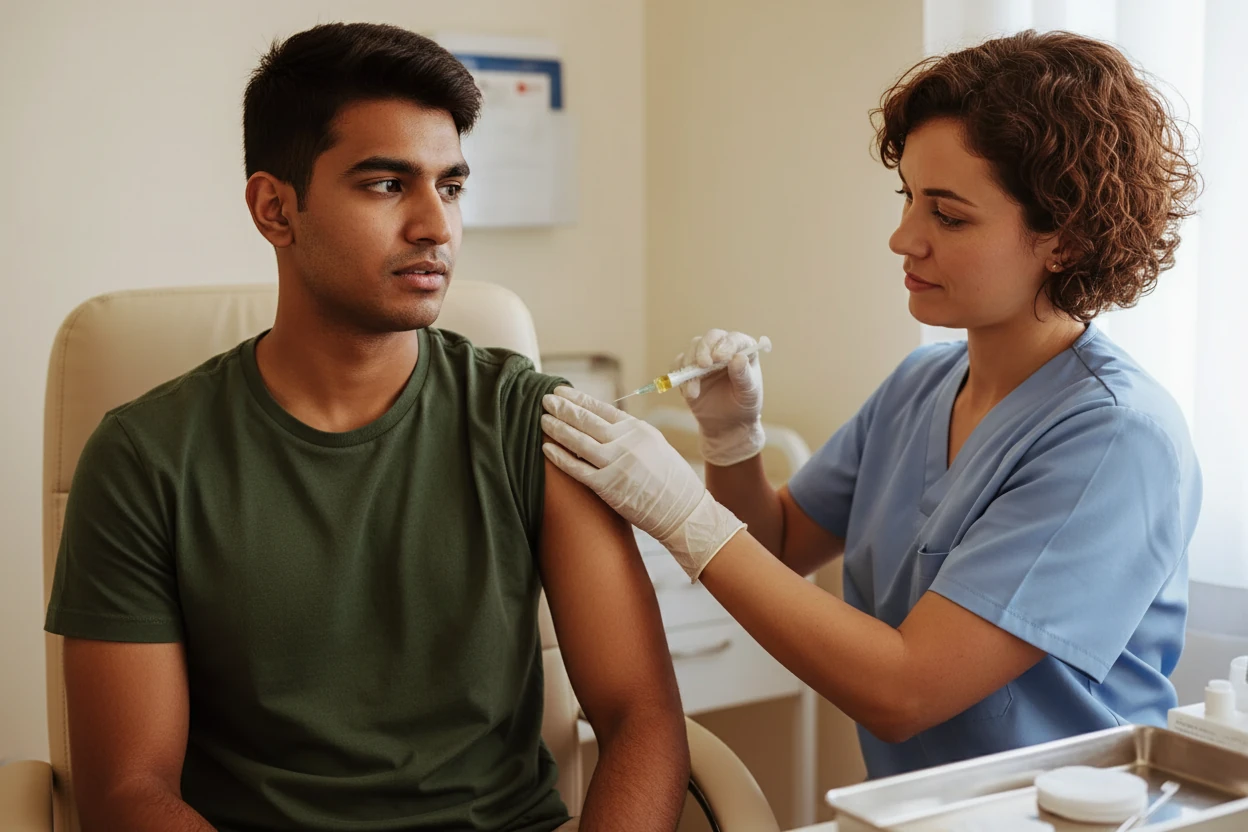
“Now is a good time to receive the COVID vaccine for several reasons. For one thing, it takes up to four weeks for a vaccine to become fully effective. We want to make sure we have adequate lead time before the winter surge of infections happens.”
— James Bigham, MD, University of Wisconsin School of Medicine and Public Health24
The World Health Organization’s Technical Advisory Group on SARS-CoV-2 Virus Evolution (TAG-VE) notes that although BQ.1 and XBB sublineages exhibit differences in immune escape potential, their overall clinical outcomes remain similar and do not currently warrant designation as separate variants of concern11. These subvariants remain part of the Omicron family, which continues to be the dominant variant globally11.
Key facts about emerging Omicron subvariants:
- BQ.1 and BQ.1.1 descend from BA.5 and carry additional spike mutations conferring immune evasion86.
- XBB is a recombinant of two BA.2 sublineages, with a unique combination of mutations enhancing antibody escape75.
- Both BQ.1.1 and XBB show convergent evolution, sharing spike protein changes that improve immune evasion9.
- These subvariants have rapidly expanded in multiple countries, including the United States and Singapore12.
- Despite immune escape, no substantial increase in disease severity has been observed compared to earlier Omicron subvariants1112.
Virus Mutations Increasing Transmissibility
The rapid spread of BQ.1.1 and XBB subvariants is driven by mutations in the spike protein that enhance the virus’s ability to bind to the ACE2 receptor on human cells and evade neutralizing antibodies. For example, XBB.1.5 exhibits strong ACE2 binding affinity combined with immune escape mutations, giving it a growth advantage over previous variants1314.
These mutations allow the virus to infect individuals who have prior immunity from vaccination or previous infection, increasing reinfection rates and overall case numbers814. Epidemiological data from Singapore demonstrate how quickly XBB rose in prevalence, increasing from 22% to 54% of cases within a single week15.
The evolution of SARS-CoV-2 favors variants that maximize human-to-human transmission by improving replication efficiency and immune evasion914. BQ.1.1 and XBB represent recent steps in this evolutionary process, showing the strongest antibody escape among tested Omicron subvariants816.
Key mechanisms and outcomes related to transmissibility:
- Spike protein mutations increase ACE2 receptor binding, facilitating viral entry into cells139.
- Immune evasion mutations reduce neutralization by antibodies from vaccines or prior infection, enabling reinfections814.
- Rapid replacement of prior variants by BQ.1.1 and XBB subvariants has been observed globally171.
- Enhanced transmissibility is linked to a combination of increased viral fitness and immune escape9.
- These variants contribute to rising COVID-19 case numbers despite existing population immunity8.
| Treatment Type | Effectiveness Against BQ.1.1 and XBB | Notes |
|---|---|---|
| Omicron-specific boosters | Effective in preventing severe disease34 | Reduce hospitalizations despite breakthrough infections |
| Monoclonal antibodies | Largely ineffective202116 | Resistance due to spike mutations; limited use for immunocompromised patients |
| Antiviral drugs (Paxlovid) | Remain effective2022 | Important treatment option during infection |
Omicron Booster Efficacy Amid Rising Cases
Despite the increased transmissibility and immune evasion of BQ.1.1 and XBB subvariants, Omicron-specific bivalent boosters targeting BA.4/BA.5 and XBB lineages remain effective in preventing severe COVID-19 outcomes, including hospitalizations34. These boosters reduce the risk of severe disease even though breakthrough infections can occur3.
“Based on currently available evidence, the TAG-VE does not feel that the overall phenotype of XBB and BQ.1 diverge sufficiently from each other, or from other Omicron lineages with additional immune escape mutations, in terms of the necessary public health response, to warrant the designation of new variants of concern and assignment of a new label.”
— WHO Technical Advisory Group on SARS-CoV-2 Virus Evolution (TAG-VE)11
Monoclonal antibody therapies, once a key treatment option, have largely lost efficacy against these subvariants due to spike protein mutations conferring resistance202116. This loss poses challenges, especially for immunocompromised patients who rely on these therapies for prevention and treatment20.
Antiviral drugs such as nirmatrelvir/ritonavir (Paxlovid) continue to be effective treatment options against BQ.1.1 and XBB subvariants2022. Epidemiological data indicate that while these subvariants are spreading, the surges in cases are less explosive than the initial Omicron wave in late 202112.
Public health authorities emphasize the importance of ongoing surveillance and vaccination updates to mitigate the impact of these variants during the winter season223.
Key points on booster efficacy and treatment:
- Omicron-adapted bivalent boosters provide protection against severe disease caused by BQ.1.1 and XBB34.
- Breakthrough infections may still occur, but boosters reduce hospitalization risk34.
- Most authorized monoclonal antibodies have reduced efficacy against these subvariants2021.
- Antiviral drugs like Paxlovid remain effective treatment options2022.
- Current surges are less severe than the initial Omicron wave, but vigilance is necessary122.