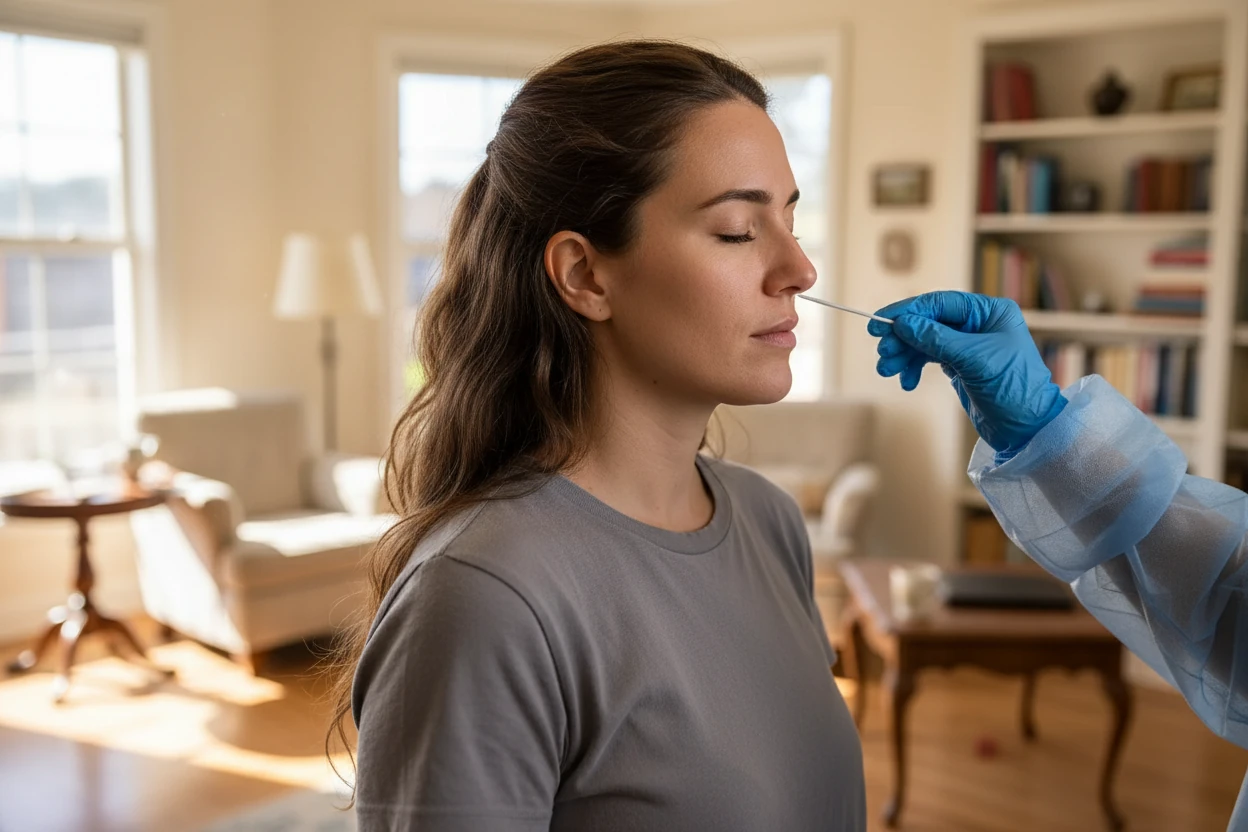
covid-test-accuracy-for-eg5-and-ba286-variantscovid-test-accuracy-for-eg5-and-ba286-variants">COVID-19 testing is a critical tool for controlling the spread of the virus, especially after exposure to an infected individual. Testing at the right time helps detect infection accurately and prevents transmission to others. Current guidelines recommend testing around five days after exposure for asymptomatic individuals and immediately upon symptom onset to optimize detection and reduce false negatives12.
When to Test After COVID Exposure
Testing timing after COVID-19 exposure depends on whether symptoms are present and the nature of the exposure. Close contact is defined as being within 6 feet of an infected person for a cumulative 15 minutes or more over a 24-hour period, starting two days before the infected person’s symptom onset or positive test34.
For those with symptoms, testing should be done immediately to confirm infection and initiate isolation and treatment if needed15. If the initial test is negative but symptoms persist, retesting after 48 hours is advised to reduce the risk of false negatives25.
For asymptomatic individuals exposed to COVID-19, testing is most reliable when performed approximately five full days after exposure. Testing too early risks false-negative results due to low viral loads during the incubation period672. Testing before day five may miss infections that have not yet reached detectable levels.
Testing is also recommended before attending large gatherings or visiting high-risk individuals, ideally within 24 to 48 hours prior1. In high-risk settings, screening testing programs may require more frequent or earlier testing2.
- Close contact is defined as 15 minutes or more within 6 feet over 24 hours starting 2 days before symptom onset in the index case34.
- Test immediately if symptomatic; retest after 48 hours if initial test is negative25.
- Asymptomatic exposed individuals should test at least 5 days post-exposure72.
- Testing before high-risk interactions or events is advised within 1-2 days1.
- Early testing may yield false negatives; repeat testing improves detection2.
COVID Incubation Period
The incubation period is the time from exposure to symptom onset and varies by SARS-CoV-2 variant and host factors such as age89. Pre-Omicron variants had an average incubation of about 5 days, with a range of 2 to 14 days108. Omicron variants shortened this period to approximately 2 to 3 days and are more transmissible68.
Because viral loads increase over the incubation period, testing too early often results in false negatives. Viral load typically peaks around 4 to 5 days after symptom onset, which aligns with the recommendation to test around day 5 post-exposure for asymptomatic individuals111.
Vaccinated individuals may experience shorter durations of viral shedding and test positivity, which can influence the timing and interpretation of test results1213. Age-related factors may also affect incubation length, with some evidence suggesting variability in different age groups9.
| Variant Type | Average Incubation Period | Notes |
|---|---|---|
| Pre-Omicron | ~5 days (2–14 days range) | Longer incubation, slower viral rise |
| Omicron (BA.1/BA.2) | ~2–3 days | Shorter incubation, higher transmissibility68 |
- Incubation varies by variant and host factors like age89.
- Omicron variants have shorter incubation and higher transmissibility68.
- Viral load peaks 4–5 days after symptom onset111.
- Vaccination shortens viral shedding duration1213.
- Testing too early risks false negatives due to low viral load6.
Delayed Positive Test Results
Delayed positive test results can complicate early diagnosis, particularly with Omicron subvariants. These variants may initially replicate more in the throat (oropharynx) than in nasal passages, reducing the sensitivity of nasal swab tests early in infection1412. This can cause symptomatic individuals to test negative initially despite infection.
Immune memory from vaccination or prior infection may trigger symptoms before viral loads reach detectable levels, further contributing to early false-negative results146. This phenomenon was less common with earlier variants, highlighting the need for repeat testing in symptomatic individuals even after a negative initial test12.
Vaccinated young adults infected with Delta or Omicron variants tend to have shorter durations of detectable infection, which may affect the window for positive test results1213. Most infected individuals test positive within 2 to 3 days after symptom onset, though some remain positive at day 513.
- Omicron subvariants may replicate initially in the throat, reducing early nasal test sensitivity1412.
- Immune response may cause symptoms before viral loads are detectable6.
- Early negative tests in symptomatic individuals require repeat testing12.
- Vaccinated individuals may have shorter periods of test positivity1213.
- Most test positive within 2–3 days after symptoms begin13.
“Delayed positivity appears more common with Omicron subvariants than with earlier strains, complicating early diagnosis.”
— Expert consensus612
Quarantine Guidelines After Exposure
Quarantine recommendations have evolved with increasing population immunity and the availability of treatments. While isolation remains necessary for those who test positive or develop symptoms, many jurisdictions have relaxed mandatory quarantine for exposed individuals without symptoms as of 2024151617.
Exposed individuals are advised to wear high-quality masks (such as N95 or equivalent) around others indoors for 10 days after exposure, especially when in contact with high-risk persons161718. Masking and physical distancing remain important preventive measures to reduce transmission risk19.
If symptoms develop after exposure, immediate isolation and testing are recommended18. For those at higher risk of severe COVID-19, testing within 5 days post-exposure is advised to enable early treatment if needed1718.
- Isolation is required for those who test positive or develop symptoms1718.
- Quarantine for asymptomatic exposed individuals has been relaxed in many areas1516.
- Mask indoors around others for 10 days post-exposure, especially near high-risk people1617.
- Test within 5 days post-exposure if at high risk or symptomatic1718.
- Maintain distancing and hygiene to reduce transmission19.
“COVID-19 vaccination remains the most important strategy to prevent serious illness and death, and early treatments are effective if started within 5–7 days of symptom onset.”
— California Department of Public Health17
Negative Test After Exposure
A negative COVID-19 test after exposure does not definitively rule out infection, especially if testing occurs too early. Transmission can occur during the presymptomatic phase, which may last up to 10 days post-exposure68. Therefore, individuals with negative tests should continue to take precautions such as masking and distancing to protect others1619.
Repeat testing is strongly recommended after an initial negative antigen test to improve detection accuracy. The FDA advises performing at least two negative antigen tests 48 hours apart for symptomatic individuals and three tests over five days for asymptomatic exposed persons202.
If symptoms develop after a negative test, immediate retesting is warranted. PCR tests offer higher sensitivity and may detect infection earlier than antigen tests, making them preferable for early diagnosis when available67.
- Negative test early after exposure may be false negative612.
- Transmission risk exists up to 10 days post-exposure8.
- Repeat antigen testing every 48 hours improves detection202.
- Continue masking and distancing after negative test19.
- PCR tests are more sensitive and preferred for early detection67.
💡 Did You Know? The FDA requires labeling on antigen tests to recommend repeat testing at least twice over three days for symptomatic individuals and three times over five days for asymptomatic exposed persons20.
Key Takeaways
- Testing immediately upon symptom onset and at approximately 5 days after exposure for asymptomatic individuals optimizes COVID-19 detection147.
- The incubation period varies by variant, with Omicron shortening it to about 2–3 days compared to 5 days for earlier strains68.
- Delayed positive test results are more common with Omicron subvariants due to variant-specific viral replication sites and immune response dynamics14612.
- Quarantine requirements have been relaxed, but masking and distancing remain essential after exposure to reduce transmission risk151619.
- Negative antigen tests do not rule out infection; repeat testing every 48 hours is recommended to improve accuracy202.