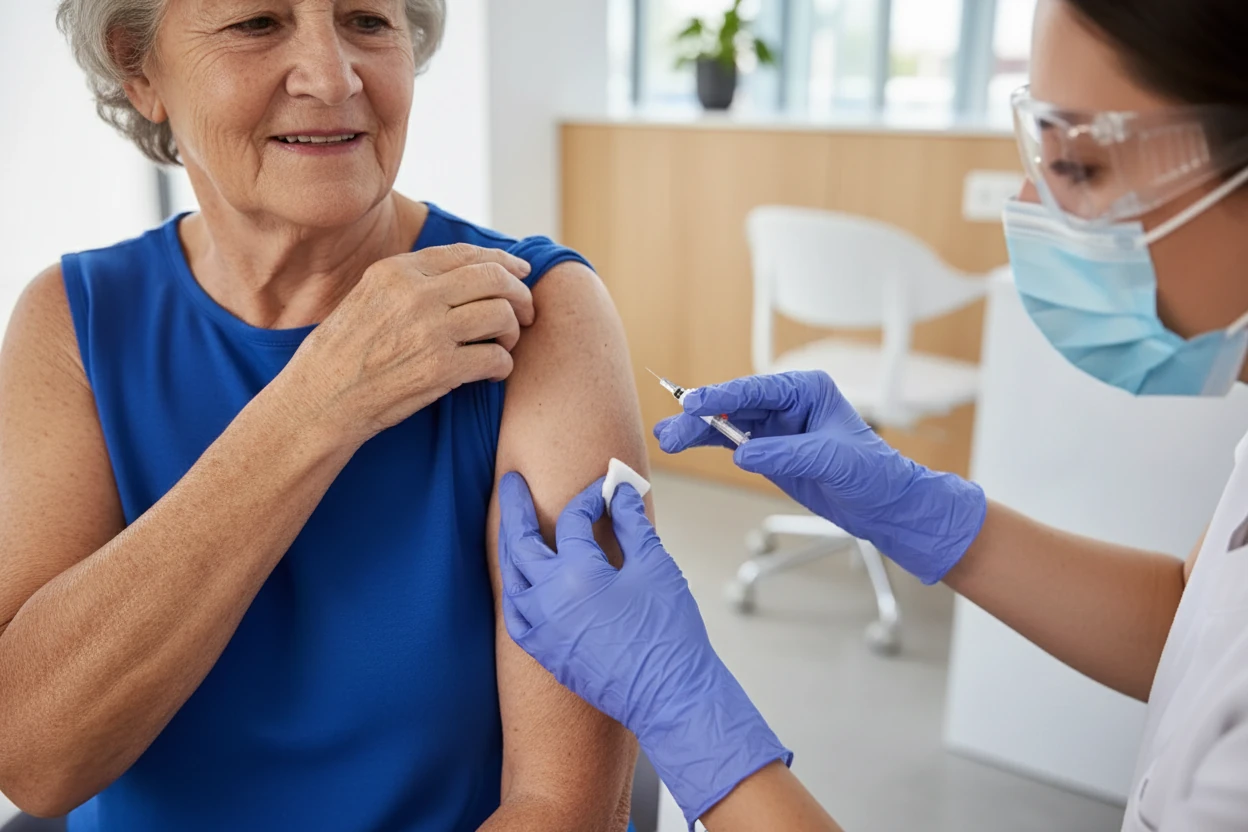
Recent studies involving millions of older adults have investigated the potential stroke risk following blood-pressureblood-pressurecovid-recovery-monitoring-at-home">covid-recovery-monitoring-at-home">COVID-19 bivalent and influenza vaccinations. While some data suggest a small increase in stroke risk when these vaccines are given together, particularly in seniors aged 85 and older, the overall risk remains very low compared to the dangers posed by COVID-19 or flu infections themselves12. Understanding these findings can help older adults make informed decisions about vaccination timing and recognize stroke symptoms promptly.
Investigating the Potential Stroke Risk
A large observational study analyzed Medicare claims from over 5.3 million adults aged 65 and older who received COVID-19 bivalent vaccines between August 31, 2022, and February 4, 20231. The study found a small but statistically significant increase in stroke risk during the 22- to 42-day window after bivalent vaccination, with an incidence rate ratio (IRR) of 1.09 and a risk difference of 1.65 strokes per 100,000 doses3. However, this risk varied by age group in an unusual pattern: it was higher in the 65–74 age group after Moderna bivalent vaccination and in the 85+ age group after Pfizer bivalent vaccination, but not in the 75–84 age group1.
This inconsistency suggests caution in interpreting the findings. The study authors propose that the observed stroke risk may be driven primarily by influenza vaccination rather than the simultaneous administration of both vaccines3. High-dose or adjuvanted influenza vaccines, designed to boost immune responses in older adults, were associated with a small increase in stroke risk, particularly in those aged 85 and older14.
Additional analyses found:
- A small increase in nonhemorrhagic stroke and transient ischemic attack (TIA) risk following high-dose or adjuvanted influenza vaccines, with risk differences ranging from about 1.6 to 6.6 per 100,000 doses depending on age and timing34.
- No consistent association between COVID-19 bivalent vaccines alone and stroke risk across all age groups, risk windows, or vaccine brands13.
- The increased stroke risk observed with concomitant COVID-19 bivalent and influenza vaccination was inconsistent and likely driven by the influenza vaccine component3.
It is important to note that this study was observational and did not include unvaccinated individuals for comparison, so it cannot establish causality—only associations1. Experts have also questioned the study design, noting it only compared stroke events occurring soon after vaccination versus later, without a true control group2.
Moreover, other large studies worldwide have found no significant increase in stroke risk after COVID-19 vaccination in older adults56. The absolute risk of stroke following vaccination is very small, especially when compared to the much higher risk of severe illness and death from COVID-19 infection in seniors7.
“The absolute risk is minuscule. I mean it is trivial in comparison to the risk for people over 85 of dying from Covid.”
— Dr. Steve Nissen7
| Age Group | Vaccine Brand | Stroke Risk Observed | Risk Window (Days) | Risk Difference per 100,000 Doses |
|---|---|---|---|---|
| 65–74 | Moderna mRNA-1273.222 | Increased combined nonhemorrhagic stroke or TIA | 22–4213 | 3.373 |
| 75–84 | None significant | No increased risk detected | — | — |
| 85+ | Pfizer BNT162b2 | Increased nonhemorrhagic stroke and combined outcome | 1–2113 | 11.93 (stroke), 15.35 (combined)3 |
- The increased stroke risk after vaccination is very small, on the order of 1 to 15 additional cases per 100,000 doses3.
- The risk pattern is inconsistent and may be a statistical anomaly3.
- Influenza vaccines, especially high-dose or adjuvanted types, may contribute more to the observed risk than COVID-19 vaccines13.
- The benefits of vaccination in preventing severe COVID-19 and influenza illness outweigh these small potential risks17.
Timing Your COVID and Flu Vaccinations
The Centers for Disease Control and Prevention (CDC) recommends that COVID-19 and influenza vaccines can be administered during the same visit for convenience and timely protection1. However, some individuals may prefer to stagger their vaccinations to reduce the chance of overlapping side effects.
Common side effects of both vaccines include injection site pain, muscle aches, and fatigue. Separating the shots by at least two weeks may help lessen the overall side effect burden1. For people with limited access to healthcare or vaccination sites, receiving both vaccines simultaneously remains safe and is encouraged to ensure protection1.
Experts have offered differing advice on vaccine timing:
- Dr. Peter Marks from the FDA suggests getting the COVID-19 vaccine first, followed by the flu vaccine about two weeks later, to minimize side effect overlap and confusion2.
-
Dr. William Schaffner, an infectious disease expert, says that getting both vaccines at the same time is reasonable and convenient, especially for older adults2.
-
Personal preference and convenience
- Access to vaccination sites
- Minimizing side effects by spacing vaccines
- Ensuring timely protection before flu season or COVID-19 surges
“If you want to minimize the chance of interactions and minimize confusing the side effects from one with another, you wait about two weeks between the vaccines.”
— Dr. Peter Marks2
Recognizing Stroke Symptoms and Signs
Regardless of vaccination timing, it is crucial for older adults and their caregivers to recognize the signs of stroke and seek immediate medical attention. Early treatment can significantly improve outcomes.
The CDC promotes the FAST acronym to help identify stroke symptoms quickly:
- Face drooping: One side of the face may droop or feel numb.
- Arm weakness: One arm may drift downward or be weak.
- Speech difficulty: Speech may be slurred or hard to understand.
- Time to call emergency services: If any of these signs are present, call 911 immediately1.
Stroke symptoms can occur at any time, including after vaccination. Knowing the FAST signs and acting quickly is essential for older adults and caregivers. Immediate medical attention improves recovery chances and reduces complications.1
Additional stroke symptoms can include sudden severe headache, numbness or weakness in limbs, vision changes, dizziness, and confusion1. If stroke symptoms are suspected, individuals should go directly to the emergency room without delay1.
- Sudden numbness or weakness, especially on one side of the body
- Sudden confusion or trouble speaking or understanding speech
- Sudden trouble seeing in one or both eyes
- Sudden trouble walking, dizziness, loss of balance or coordination
- Sudden severe headache with no known cause
Prompt recognition and emergency response can save lives and reduce disability1.