The FLiRT variants, a group of SARS-CoV-2 Omicron subvariants, have rapidly become prominent in the United States and globally during 2024, accounting for a significant share of COVID-19 infections12. These variants carry specific mutations that enhance their ability to evade immune responses, raising concerns about vaccine effectiveness and potential new waves of infection34. Despite these challenges, current evidence suggests that FLiRT variants do not cause more severe illness than previous Omicron strains56.
Understanding the FLiRT Variants
FLiRT variants are sublineages derived from the JN.1 Omicron subvariant, which has been dominant in the U.S. since late 20231. The name "FLiRT" refers to key mutations in the spike protein at positions 456, 346, and 572, which are critical for the virus's ability to infect cells and evade antibodies74. Specifically:
- The F456L mutation replaces phenylalanine (F) with leucine (L) at position 4567.
- The R346T mutation replaces arginine (R) with threonine (T) at position 3467.
- The T572I mutation, present in some FLiRT subvariants, changes threonine (T) to isoleucine (I) at position 572, enhancing the virus's cell-binding ability4.
These mutations represent a cycle of viral adaptation where the virus evades antibody recognition but compensates for reduced receptor binding through additional changes4. The FLiRT family includes variants such as KP.2, KP.3, and KP.1.1, with KP.2 cases rising from 4% to about 25% in the U.S. within weeks in early 20241. KP.3, a related variant with an additional mutation at position 493 (Q493E), has become dominant in the U.S., accounting for over one-third of infections74.
Key points about FLiRT variants include:
- They belong to the Omicron lineage, first identified in 20218.
- JN.1 and its descendants, including FLiRT, accounted for over 50% of U.S. infections in early 202412.
- FLiRT variants show convergent evolution, independently acquiring the same spike protein mutations4.
- These mutations help the virus evade neutralizing antibodies while maintaining or enhancing infectivity79.
Surveillance programs such as those by the CDC emphasize tracking these variants to guide vaccine updates and public health measures12.
Severity of Illness from FLiRT
Current research indicates that FLiRT variants do not cause more severe covid-test-accuracy-for-eg5-and-ba286-variantscovid-test-accuracy-for-eg5-and-ba286-variants">COVID-19 illness compared to earlier Omicron subvariants5. Symptom profiles remain consistent with typical COVID-19 features, including fatigue, fever, cough, congestion, and loss of taste or smell, although symptom prevalence may vary slightly with evolving variants10611. Hospitalization and death rates have declined since the rise of JN.1 and its descendants, including FLiRT6.
The severity of COVID-19 infection depends more on individual factors such as immunity status and overall health than on the specific variant512. Most people experience mild to moderate illness, with severe outcomes primarily affecting vulnerable populations like the elderly and immunocompromised11.
- Fatigue and body aches11
- Fever and chills11
- Congestion and runny nose11
- Cough and sore throat11
- Loss of taste or smell1011
- Occasional gastrointestinal symptoms11
Antiviral treatments such as Paxlovid remain effective against FLiRT variants, as these drugs target viral components less prone to mutation411.
“As we have seen before with COVID, each progeny or offspring variant is more contagious, but the good news is that they also tend to be less severe. That’s because after years of living with COVID, through vaccinations and infections we have greater population immunity.”
— Todd Ellerin, MD, South Shore Health11
Vaccine Effectiveness Against FLiRT Variants
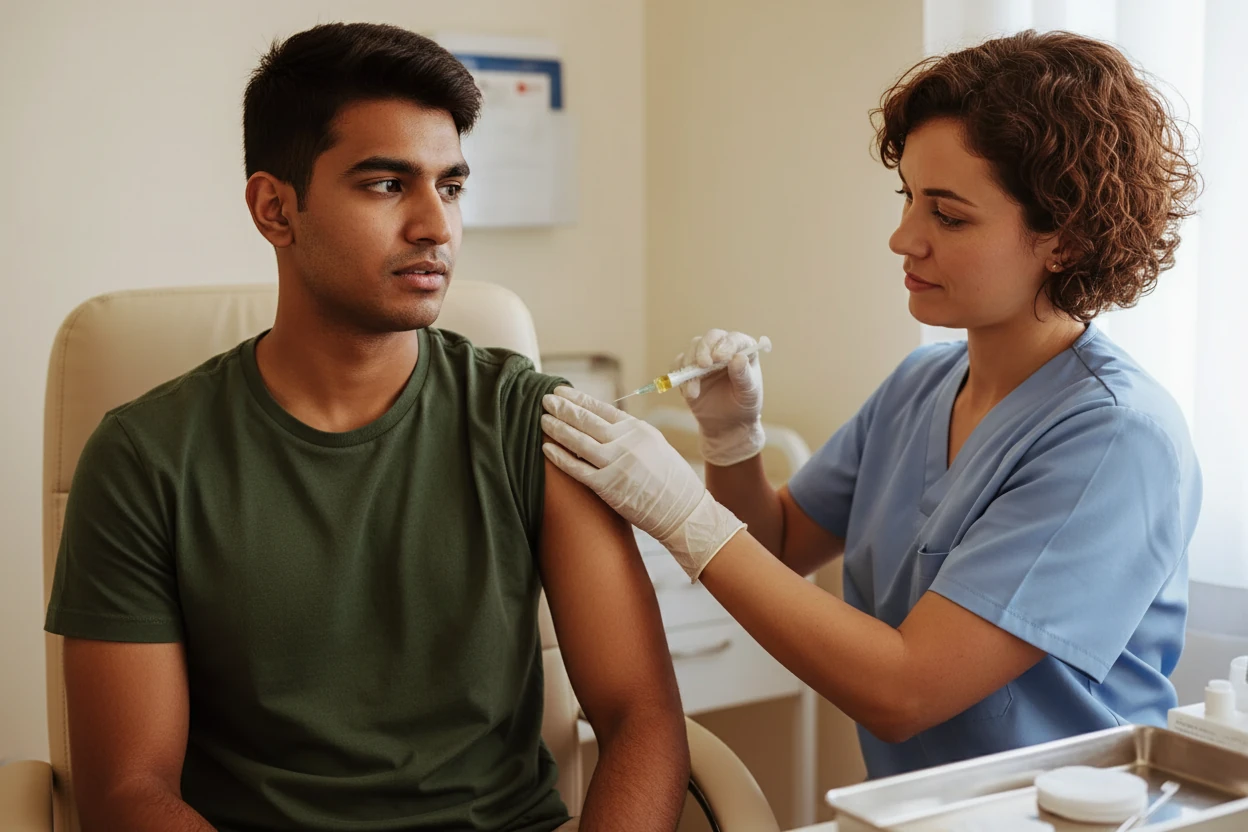
FLiRT variants exhibit increased resistance to neutralization by antibodies generated from bivalent vaccines targeting earlier Omicron strains like XBB.1.5, indicating some degree of immune escape313. This antigenic drift reduces the similarity between circulating variants and vaccine strains, potentially lowering booster vaccine effectiveness14. However, vaccines continue to provide significant protection against severe disease, hospitalization, and death15.
The World Health Organization (WHO) and regulatory bodies have recommended updating COVID-19 vaccine compositions to include antigens from the JN.1 lineage and its descendants, such as FLiRT variants, to improve immune coverage16144. Vaccine manufacturers are expected to release updated vaccines targeting these variants in the fall of 202411.
Key points on vaccine effectiveness:
- Bivalent vaccines based on XBB.1.5 generate some cross-reactive antibodies against JN.1 but may be less effective against newer FLiRT subvariants34.
- Vaccine-induced immunity wanes over time, emphasizing the need for updated boosters411.
- Updated vaccines targeting JN.1-related antigens are expected to enhance protection against FLiRT variants1614.
- Vaccination remains the best defense against severe COVID-19 outcomes1715.
💡 Did You Know? The FDA advised manufacturers in mid-2024 to update COVID-19 vaccines to target the KP.2 strain, a dominant FLiRT variant, to better match circulating viruses for the 2024/25 season11.
Potential Summer COVID Wave from FLiRT
The FLiRT variants' increased transmissibility and immune evasion raise concerns about a possible COVID-19 wave during the summer months1819. In mid-2024, FLiRT variants accounted for more than 75% of new COVID-19 cases in the U.S., with test positivity rates and emergency room visits rising in several states11. Wastewater surveillance has also detected high viral loads, signaling increased community transmission211.
However, despite these indicators, overall COVID-19 incidence and hospitalizations have remained stable or declined in many regions, likely due to widespread immunity from vaccination and prior infection326. Modeling studies suggest that future waves depend on factors such as variant transmissibility, immune escape, and timing of introduction2021.
Factors influencing the potential summer wave include:
- High prevalence of FLiRT variants with immune escape mutations319.
- Waning immunity in the population due to time since last vaccination or infection411.
- Seasonal behavior changes, including increased indoor gatherings during hot weather18.
- Co-circulation of other respiratory viruses like influenza and RSV22.
Public health experts caution that while major surges may be less likely than in earlier pandemic phases, vulnerable populations remain at risk during any increase in cases202311.
Protecting Yourself During a COVID Wave
Protection strategies during a COVID wave caused by FLiRT or related variants focus on vaccination, testing, and preventive behaviors17154. Maintaining up-to-date COVID-19 vaccination status, including receiving boosters aligned with updated vaccine formulations, is critical, especially for older adults and high-risk individuals171511.
Additional protective measures include:
- Practicing good hand hygiene17.
- Improving indoor ventilation to reduce airborne transmission17.
- Wearing masks in crowded or poorly ventilated settings, especially if local case rates are rising11.
- Monitoring local COVID-19 activity through case counts and wastewater surveillance211.
- Keeping rapid COVID-19 tests at home for early detection and isolation if symptomatic411.
If infected, following CDC guidance on isolation and care helps prevent spread to others, particularly those at higher risk of severe disease11.
“Viruses mutate all the time, so I’m not surprised to see a new coronavirus variant taking over. And I’m guessing it will continue to mutate.”
— Scott Roberts, MD, Yale Medicine12
Staying informed about evolving variants and vaccine recommendations is essential to adapt protection strategies as the pandemic continues to evolve172.