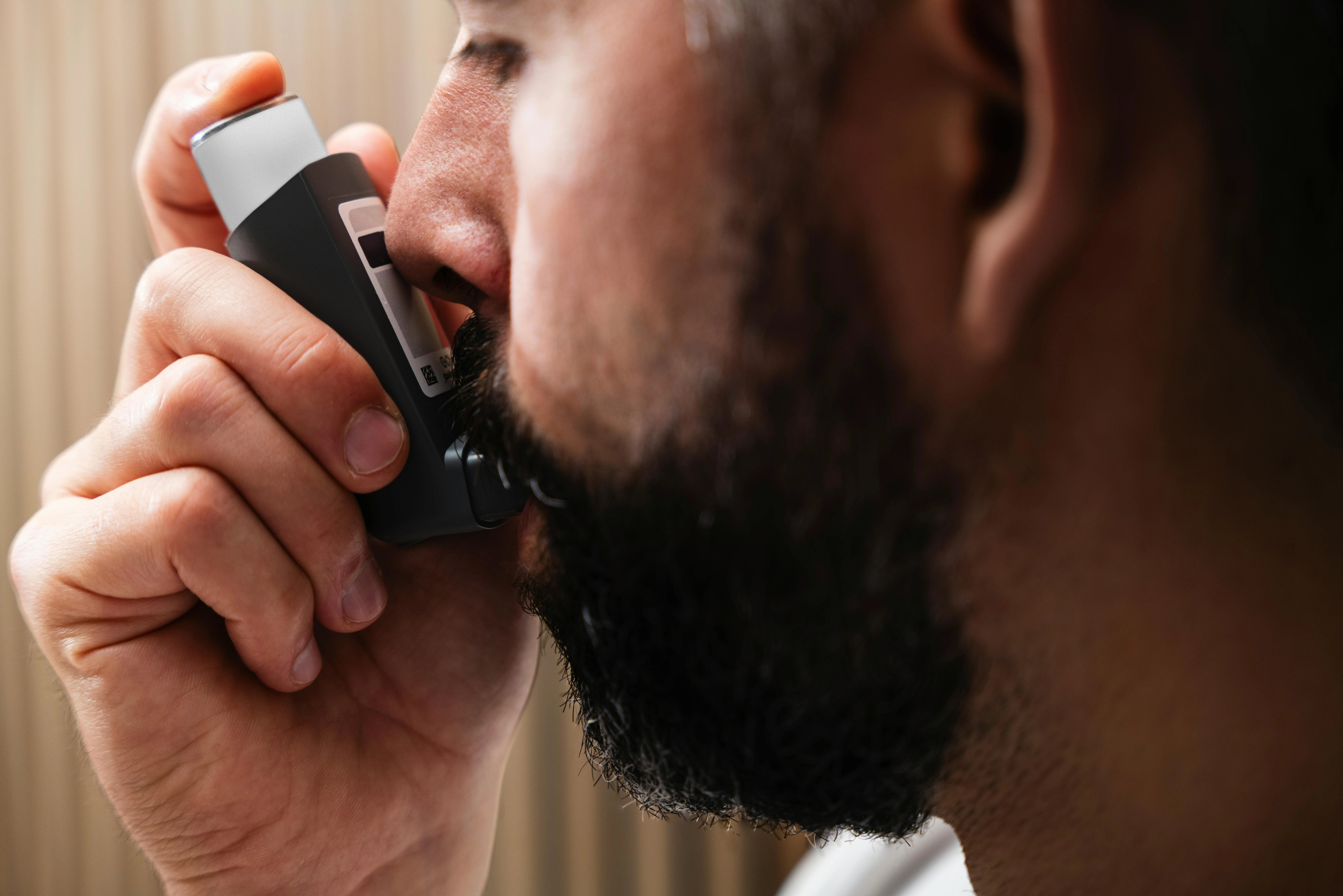
Chronic obstructive pulmonary disease (COPD) affects millions worldwide and is a leading cause of morbidity and mortality12. If a clinician needs to diagnose COPD, the key step is COPD diagnosis with spirometry because symptoms often overlap with other lung conditions and many people remain undiagnosed until the disease is advanced3. Accurate diagnosis and COPD monitoring rely on a combination of clinical assessment, lung function testing, spirometry results, and imaging to confirm airflow obstruction and evaluate disease severity45.
Medical History Assessment
The diagnosis of COPD begins with a detailed clinical assessment of symptoms and risk factors6. Patients are asked about chronic respiratory symptoms such as cough, sputum production, and progressive shortness of breath (dyspnea)6. A thorough medical history includes specific questions about exposure to tobacco smoke, which is the primary risk factor for COPD, as well as occupational dusts, chemical fumes, and other environmental pollutants67. Family history is also important, as genetic predisposition, including alpha-1 antitrypsin deficiency, can increase COPD risk6.
Key points in medical history assessment include:
- Chronic cough, sputum production, and worsening dyspnea are typical COPD symptoms6.
- Smoking history and exposure to secondhand smoke must be documented7.
- Occupational and environmental exposures to dust, fumes, and chemicals are recognized risk factors6.
- Family history of COPD or related lung diseases should be explored6.
- History of recurrent lower respiratory infections may suggest COPD development4.
💡 Did You Know? Often COPD can be hard to diagnose because symptoms can be the same as those of other lung conditions. Many people who have COPD may not be diagnosed until the disease is advanced3.
Physical Examination for COPD
Physical examination helps identify signs suggestive of COPD and guides further testing86. Healthcare providers listen to the lungs using a stethoscope to detect abnormal breath sounds such as wheezing, crackles, or decreased breath sounds67. Other physical signs include prolonged expiration and the use of accessory muscles to aid breathing, which indicate increased work of breathing6.
Typical physical exam findings in COPD include:
- Wheezing heard during lung auscultation6.
- Prolonged expiratory phase of breathing6.
- Use of accessory muscles such as neck and shoulder muscles during respiration6.
- Possible crackles or decreased breath sounds on lung exam6.
- Signs of hyperinflation in advanced disease, such as barrel chest (not always evident on physical exam)6.
These findings, combined with a history of risk factors and symptoms, prompt the use of objective diagnostic tests like spirometry8.
How Spirometry Confirms COPD Diagnosis
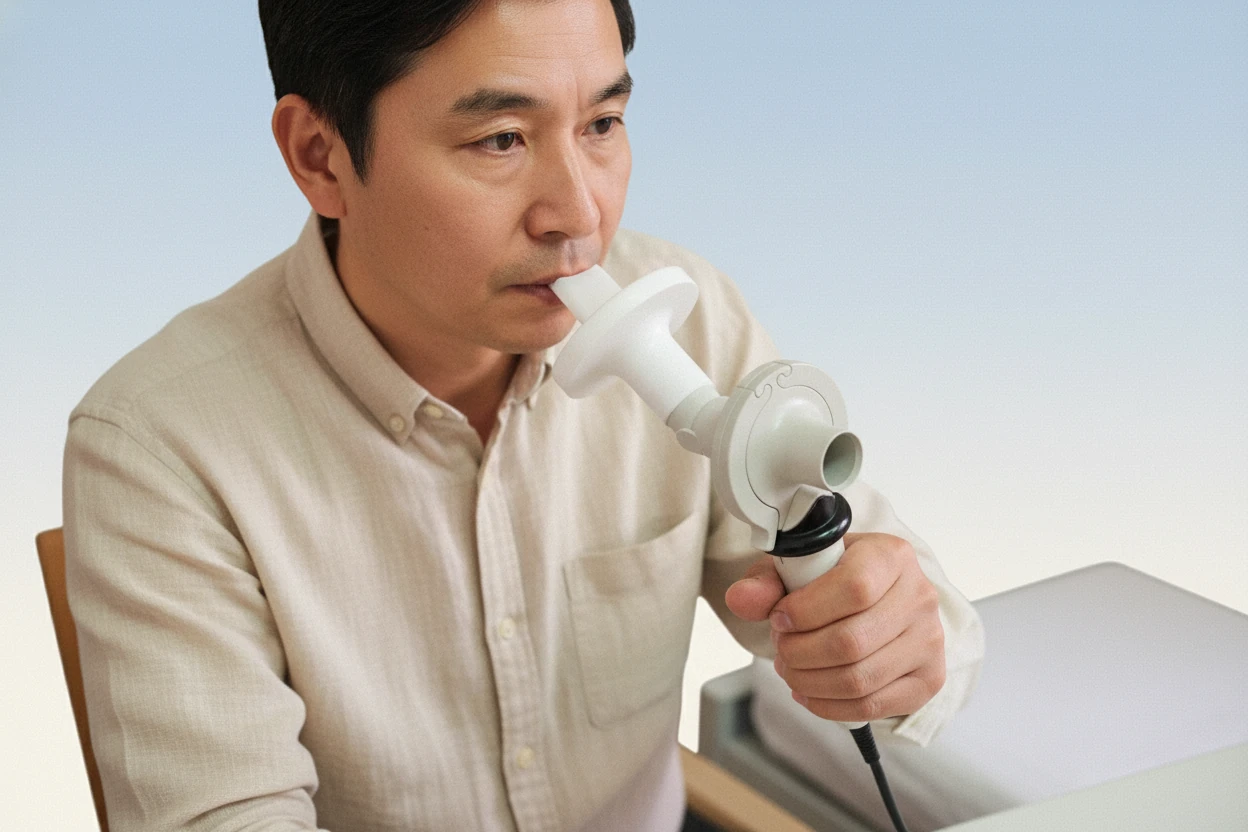
Spirometry is the gold standard test for diagnosing COPD and assessing lung function69. It measures the volume and speed of air a person can exhale after taking a deep breath. Two key parameters measured are:
- Forced expiratory volume in one second (FEV1): the amount of air exhaled in the first second6.
- Forced vital capacity (FVC): the total volume of air exhaled during the test6.
A diagnosis of COPD is confirmed when the post-bronchodilator FEV1/FVC ratio is less than 0.7, indicating airflow obstruction that is not fully reversible8610. The test is performed multiple times to ensure reproducibility, and bronchodilators are administered to assess reversibility of airway obstruction69.
Spirometry testing involves:
- Explaining the test purpose and procedure clearly to the patient9.
- Instructing the patient to take a full breath and exhale as fast and hard as possible9.
- Recording patient details such as age, sex, height, and timing of last bronchodilator use9.
- Performing at least three acceptable maneuvers and using the best results for interpretation6.
- Monitoring for transient symptoms such as dizziness, lightheadedness, fatigue, or coughing during the test6.
Spirometry not only confirms COPD diagnosis but also helps classify disease severity and guide treatment5.
“The GOLD reports serve to enable health care professionals to better manage COPD. The GOLD science committee updates the report every year by incorporating the latest evidence relevant to clinical practice, aiming to be as practical and easy to follow as possible.”
— David M G Halpin, University of Exeter Medical School10
Six-Minute Walk Test
The six-minute walk test (6MWT) is a simple, non-invasive method to assess exercise tolerance and functional capacity in COPD patients86. It measures the distance a patient can walk on a flat surface in six minutes at their own pace. This test helps evaluate the impact of COPD on daily activities and monitor disease progression or response to treatment6.
During the test:
- Vital signs and oxygen saturation are monitored before and after the walk6.
- Patients walk at a self-selected pace for six minutes6.
- The total distance walked is recorded and compared to reference values based on age, gender, and height6.
The 6MWT may also indicate the need for further diagnostic evaluation or oxygen therapy in patients with suspected or confirmed COPD6.
Blood Tests and Lab Values to Monitor in COPD
Blood tests are used to exclude other causes of respiratory symptoms and to identify genetic factors contributing to COPD86. Important blood tests include:
- Alpha-1 antitrypsin (AAT) levels to detect alpha-1 antitrypsin deficiency, a genetic risk factor for COPD611.
- Complete blood count (CBC) to identify anemia or infection that may worsen COPD symptoms6.
- Arterial blood gas (ABG) analysis to assess gas exchange efficiency, oxygen levels, and carbon dioxide retention611.
ABG results are critical for determining the need for supplemental oxygen therapy, especially in advanced COPD with respiratory failure6. Elevated carbon dioxide levels in ABG may indicate inadequate ventilation and the need for urgent intervention6.
Imaging Tests for Lung Disease
Imaging studies provide valuable information about lung structure, detect complications, and help rule out other causes of respiratory symptoms in COPD patients86.
Computed Tomography (CT) Scan
Chest CT scans offer detailed images of lung tissue and are particularly useful for:
- Detecting emphysema and other structural lung changes characteristic of COPD63.
- Assessing the extent and distribution of lung damage6.
- Identifying other causes of respiratory symptoms such as tumors or fibrosis6.
- Evaluating disease progression and severity11.
CT imaging complements spirometry by providing anatomical context to functional impairment6.
Chest X-Ray
Chest X-rays are quick, non-invasive tests used to:
- Rule out other lung conditions like pneumonia or lung cancer that may mimic COPD symptoms67.
- Detect lung tissue damage such as hyperinflation seen in advanced COPD6.
- Assess for heart failure or other cardiac causes of respiratory symptoms3.
While chest X-rays cannot diagnose COPD definitively, they are important in the overall diagnostic workup7.
COPD Stages, Severity, and Spirometry Classification
The Global Initiative for Chronic Obstructive Lung Disease (GOLD) guidelines classify COPD severity based on spirometry results and symptom burden to guide treatment and prognosis812. The staging is primarily based on the percentage of predicted FEV1 after bronchodilator use:
| GOLD Stage | FEV1 (% predicted) | Description |
|---|---|---|
| GOLD 1 (Mild) | ≥ 80% | Mild airflow limitation12 |
| GOLD 2 (Moderate) | 50% – 79% | Moderate airflow limitation12 |
| GOLD 3 (Severe) | 30% – 49% | Severe airflow limitation12 |
| GOLD 4 (Very Severe) | < 30% | Very severe airflow limitation12 |
COPD patients are also categorized into groups A, B, and E based on symptoms and exacerbation history:
- Group A: Low symptom burden and low risk of exacerbations (0–1 exacerbations per year, no hospitalizations)12.
- Group B: More symptoms but low exacerbation risk12.
- Group E: High risk with frequent or severe exacerbations12.
This combined classification helps clinicians tailor therapy and monitor disease progression125.
Screening for Related Conditions
COPD symptoms can overlap with other diseases such as asthma, heart failure, and pulmonary fibrosis, making differential diagnosis essential63. A comprehensive evaluation is necessary to distinguish COPD from these conditions and to identify comorbidities that may affect management6.
Screening includes:
- Detailed history and physical exam to identify alternative or coexisting diagnoses6.
- Blood tests and imaging to rule out infections, anemia, or cardiac disease6.
- Pulmonary function testing to differentiate COPD from asthma and other lung diseases6.
COPD requires a diagnosis by a healthcare professional and ongoing assessments throughout life. Early diagnosis using spirometry can detect airflow obstruction before symptoms become severe, improving management and quality of life.114
Early identification of related conditions improves patient outcomes and guides appropriate treatment6.
How COPD Is Diagnosed: Spirometry FAQ
Q: How do doctors diagnose COPD?
A: Doctors diagnose COPD by combining a symptom review, exposure history, physical examination, and objective testing. Spirometry is the main test used to confirm persistent airflow obstruction, and additional blood tests or imaging may be used to clarify severity or rule out similar conditions68.
Q: What do COPD spirometry results show?
A: COPD spirometry results show how much air a person can exhale and how quickly they can do it. A post-bronchodilator FEV1/FVC ratio below 0.7 supports a COPD diagnosis, while FEV1 values help classify severity using GOLD staging81012.
Q: How is COPD monitored after diagnosis?
A: COPD monitoring continues after diagnosis with follow-up symptom assessment, spirometry, exacerbation review, and tests such as the six-minute walk test or oxygen evaluation when needed. These ongoing checks help clinicians adjust treatment and monitor disease progression over time6812.
COPD Spirometry Results and Monitoring Summary
Diagnosing COPD is a multifaceted process involving clinical assessment, risk factor evaluation, and objective testing64. The cornerstone of diagnosis is spirometry, which confirms persistent airflow obstruction with a post-bronchodilator FEV1/FVC ratio below 0.7810. A detailed medical history focusing on symptoms and exposures, combined with physical examination findings such as wheezing and prolonged expiration, supports the diagnosis67.
Additional tests including the six-minute walk test, blood tests for genetic and gas exchange evaluation, and imaging studies like chest X-rays and CT scans provide a comprehensive picture of disease severity and complications8611. COPD staging according to GOLD guidelines guides treatment decisions and prognosis12.