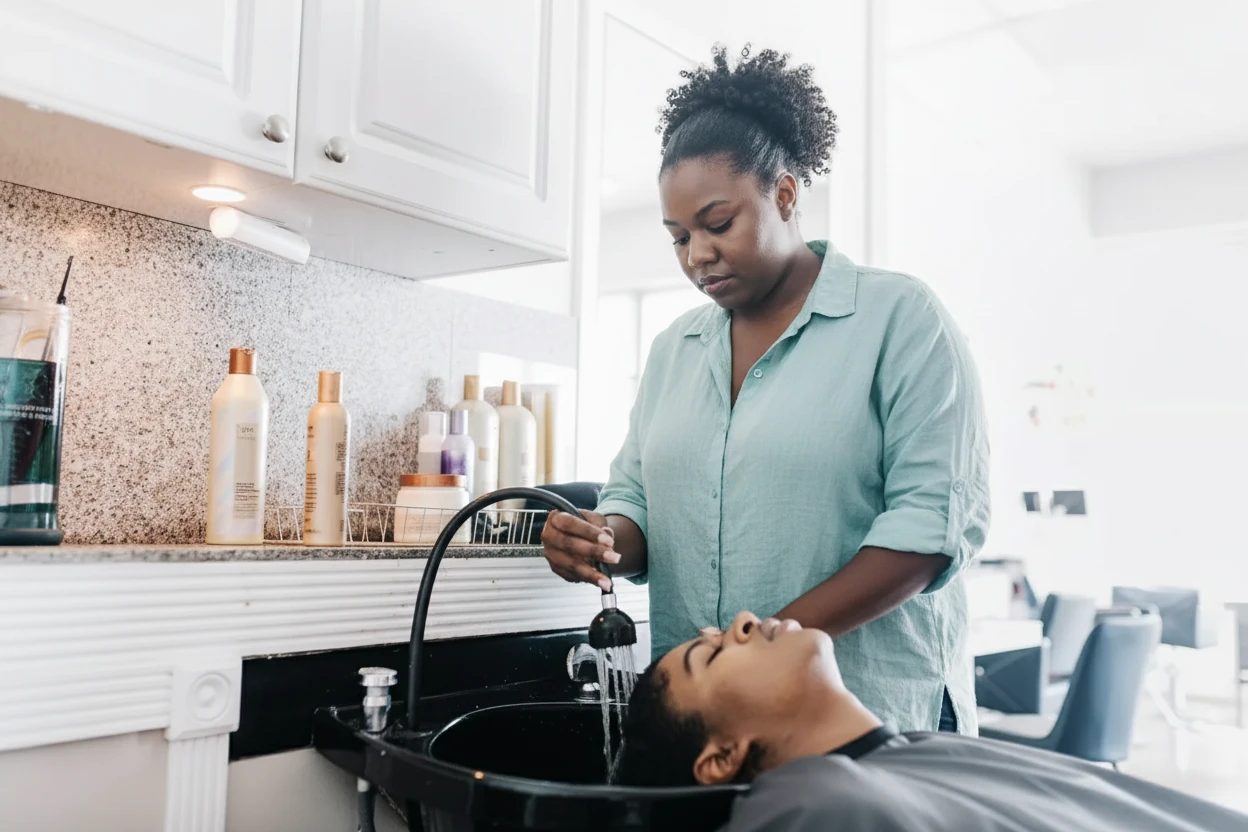
Chemical hair straighteners are widely used for styling, but recent research has raised concerns about their potential health effects. Women who frequently use these products may face a higher risk of uterine cancer deaths, a disease that affects the female reproductive system and has been increasing in incidence, especially among women of color12. Understanding the link between hair straightener use and cancer risk is important for informed decisions about personal care practices2.
“Use of hair straighteners and chemical relaxers has been associated with increased incidence of breast, uterine, and ovarian cancers. Some ingredients in these products may be genotoxic.”
— Research overview20
Hair Straightener Use and Cancer Risk
Chemical hair straighteners contain ingredients like parabens and formaldehyde that may disrupt hormone function and increase cancer risk. The scalp absorbs these chemicals more readily, especially if damaged by heat treatments, potentially raising systemic exposure.10111314
The Sister Study, a large prospective cohort involving 33,947 women aged 35 to 74 years with a uterus at baseline, provides key insights into the relationship between chemical hair straightener use and uterine cancer risk34. Over an average follow-up of 10.9 years, 378 cases of uterine cancer were identified, including endometrial carcinoma and uterine sarcoma4. Women who reported frequent use of chemical hair straighteners—defined as more than four times per year—had a 2.55-fold increased risk of developing uterine cancer compared to those who never used these products54.
This increased risk translates into a lifetime risk of 4.05% for frequent users by age 70, compared to 1.64% for women who never used hair straighteners2. Although uterine cancer remains relatively rare, accounting for about 3% of all new cancer cases, it is the most common cancer of the female reproductive system26. The incidence of uterine cancer has been rising, particularly among Black women, who also tend to develop more aggressive forms and have poorer survival rates754.
Other hair products such as hair dyes, bleach, highlights, and perms were not found to be significantly associated with uterine cancer risk in this cohort48. Approximately 60% of women who reported using hair straighteners identified as Black, highlighting potential racial disparities in exposure and risk29.
Key points about hair straightener use and uterine cancer risk:
- The Sister Study followed nearly 34,000 women for over 10 years, identifying 378 uterine cancer cases34.
- Frequent use of chemical hair straighteners (>4 times/year) was linked to a 2.5-fold increased uterine cancer risk54.
- Lifetime risk of uterine cancer by age 70 is approximately 1.64% for never users and 4.05% for frequent users2.
- No significant association was found between uterine cancer and other hair products like dyes or bleach48.
- Black women are more likely to use hair straighteners frequently and may face greater risk29.
Hair Products and Hormone-Related Cancers
“Because Black women use hair straightening or relaxer products more frequently and tend to initiate use at earlier ages than other races and ethnicities, these findings may be even more relevant for them.”
— Che-Jung Chang, PhD, National Institute of Environmental Health Sciences (NIEHS)2
Chemical hair products, including straighteners and relaxers, contain multiple compounds with carcinogenic or hormone-disrupting properties. These include parabens, bisphenol A, formaldehyde, and various metals1011. Such chemicals may interfere with hormone regulation, potentially increasing the risk of hormone-related cancers such as uterine and breast cancer7412.
The scalp is a highly absorptive area of skin, which may allow these chemicals to enter the body more readily, especially when combined with heat treatments like flat ironing that can cause scalp irritation or lesions131411. This increased absorption may enhance systemic exposure to harmful substances1011.
Epidemiological studies have shown that frequent use of chemical hair straighteners and permanent hair dyes is associated with elevated breast cancer risk, with stronger effects observed among Black women151612. For example, permanent hair dye use was linked to a 9% increased breast cancer risk in a large US cohort, while regular use of chemical hair straighteners was associated with a 30% increased breast cancer risk171812. Among Black women, hair dye use was associated with a 45% increased breast cancer risk compared to 7% in White women1516.
The exact chemicals responsible for these increased cancer risks remain unidentified, and research is ongoing to clarify the mechanisms involved1911. Some ingredients in hair straighteners may have estrogen-like effects or genotoxic properties, which could contribute to carcinogenesis20.
List of concerning chemicals in hair products linked to hormone-related cancers:
- Parabens: suspected endocrine disruptors with estrogen-like activity1011
- Bisphenol A (BPA): known to interfere with hormone function1011
- Formaldehyde: a recognized carcinogen found in some straightening treatments1011
- Metals: various metals present in hair products may have toxic effects1011
- Other genotoxic agents: some ingredients may damage DNA and promote cancer development20
Safe Hair Product Usage
“There’s much attention being given to the increased risk that comes with using these products. But even a roughly double risk is minimal when the risk for women who never use hair straighteners is less than 2%. Ultimately, the difference created by these hair straighteners is pretty tiny.”
— Susan C. Modesitt, MD, Winship Cancer Institute of Emory University6
Currently, there are no formal clinical guidelines regarding the frequency or specific types of chemical hair straightener use due to limited data on individual ingredients and product brands221911. While the absolute risk of uterine cancer remains low, women who frequently use chemical hair straighteners may consider reducing their use as a precautionary measure54.
Physical activity may play a role in modulating cancer risk by reducing chronic inflammation, which is a known factor in cancer development. However, this hypothesis requires further study to confirm its impact on uterine cancer risk associated with hair product use519.
Disparities in cancer incidence among different ethnic groups underscore the need for targeted research to identify the specific chemicals and biological mechanisms responsible for increased risk410. Until more is known, experts recommend cautious use of chemical hair straighteners without causing alarm or advocating complete avoidance52319.
Recommendations for safer hair product use:
- Limit frequency of chemical hair straightener use, especially avoiding more than four treatments per year54.
- Be aware of scalp health; avoid heat treatments that cause burns or lesions to reduce chemical absorption1314.
- Maintain regular physical activity to potentially reduce inflammation-related cancer risk519.
- Stay informed about product ingredients and opt for formulations with fewer known carcinogens or endocrine disruptors1011.
- Support and follow emerging research to guide safer hair care practices in the future410.