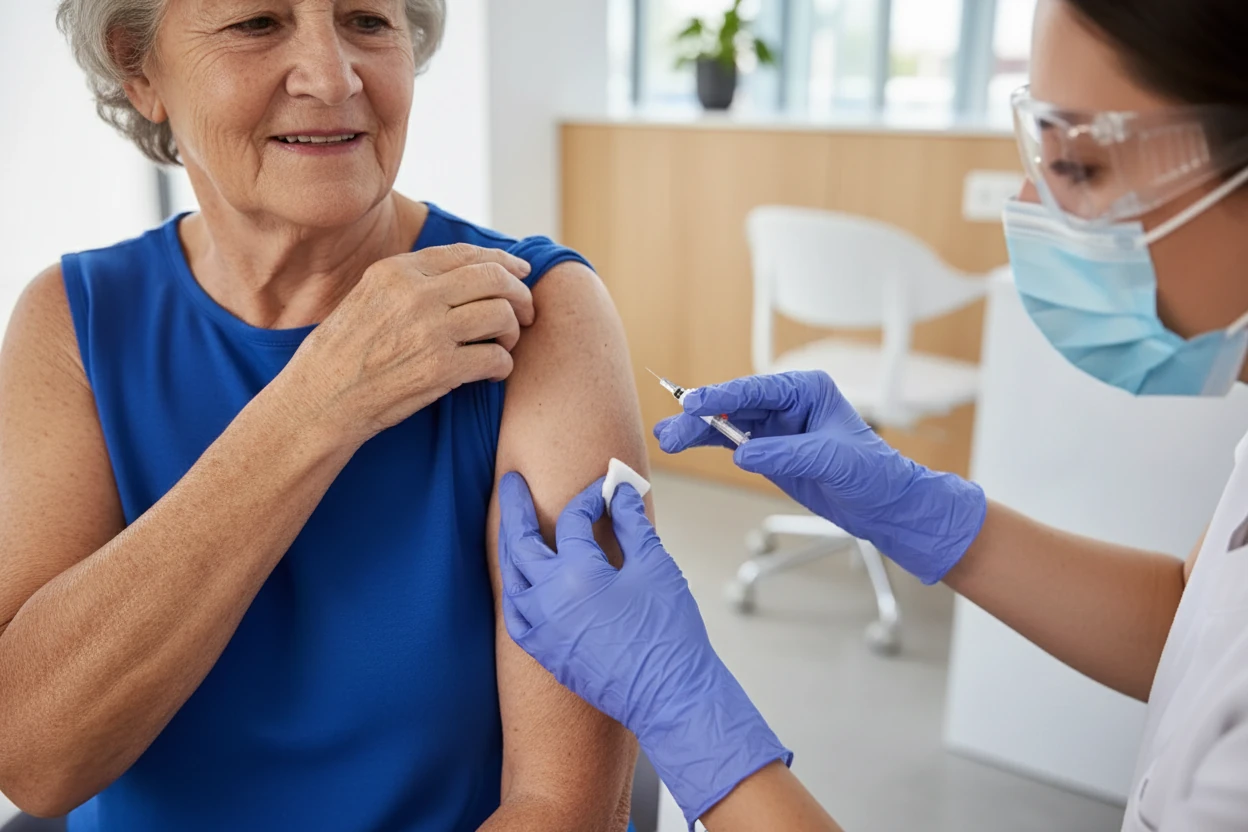
Older adults aged 65 years and older continue to face the highest risk of severe covid-test-accuracy-for-eg5-and-ba286-variantscovid-test-accuracy-for-eg5-and-ba286-variants">COVID-19 outcomes, including hospitalization and death, despite widespread vaccination efforts12. The Centers for Disease Control and Prevention (CDC) now recommends a second dose of the 2024–2025 COVID-19 vaccine for this age group to enhance protection against evolving SARS-CoV-2 variants34. These updated guidelines also address vaccine dosing for immunocompromised individuals, recognizing their increased vulnerability and the need for tailored vaccination strategies34.
CDC Recommendation: Second COVID Vaccine Dose for Older Adults & Immunocompromised
The CDC Advisory Committee on Immunization Practices (ACIP) has recommended that all persons aged 6 months and older receive the updated 2024–2025 COVID-19 vaccine to maintain protection against currently circulating SARS-CoV-2 variants34. Specifically, adults aged 65 years and older, as well as persons aged 6 months to 64 years with moderate or severe immunocompromise, should receive a second dose of the 2024–2025 COVID-19 vaccine at least six months after their previous dose, with a minimum interval of two months allowed for flexibility34.
This recommendation is based on several key factors:
- Adults aged 65 years and older have the highest COVID-19 mortality rates, accounting for the majority of deaths2.
- Immunosenescence (age-related immune system decline) and comorbidities such as diabetes, cancer, dementia, and HIV increase the risk for severe COVID-19 in older adults56.
- SARS-CoV-2 continues to circulate year-round with evolving variants that reduce vaccine effectiveness over time, necessitating updated vaccine doses73.
- Vaccine effectiveness wanes over months, and immune escape by variants reduces protection, especially in high-risk groups84.
- Immunocompromised individuals often have heterogeneous risk profiles and may require additional or tailored booster doses to achieve adequate protection6.
The vaccines authorized for the 2024–2025 season include mRNA vaccines from Moderna and Pfizer-BioNTech, as well as the protein subunit vaccine Novavax for eligible age groups53. The CDC emphasizes that persons with moderate or severe immunocompromise may receive additional doses beyond the second dose based on shared clinical decision-making with their healthcare provider34.
| Population Group | Number of 2024–2025 COVID-19 Vaccine Doses Recommended | Timing Between Doses |
|---|---|---|
| Adults ≥65 years | 2 doses | Second dose 6 months after first (minimum 2 months)34 |
| Persons 6 months–64 years with moderate or severe immunocompromise | ≥2 doses (additional doses possible) | Second dose 6 months after first (minimum 2 months); further doses based on clinical decision-making34 |
| Persons ≥6 months without immunocompromise | 1 dose | Single updated dose recommended annually34 |
The CDC also clarifies that persons aged 65 years and older who are previously unvaccinated and receive Novavax should complete a two-dose primary series followed by a third dose of any age-appropriate 2024–2025 COVID-19 vaccine six months later3.
The rationale for these recommendations includes evidence that additional vaccine doses restore waning immunity, significantly reducing hospitalizations and deaths in older adults and immunocompromised persons84. Immunocompromised patients, such as those undergoing bone marrow transplants or receiving immunosuppressive therapies, may have reduced vaccine responses and require individualized vaccination schedules6.
“Receiving recommended 2024-2025 COVID-19 vaccines can restore and enhance protection against the virus variants currently responsible for most infections and hospitalizations in the United States.”
— CDC Director Dr. Mandy Cohen9
Updated CDC Guidance: Who Needs a Second COVID Booster & What to Expect
The updated CDC guidance impacts older adults and immunocompromised individuals by recommending additional COVID-19 vaccine doses to maintain and enhance protection against severe disease34. The key implications include:
- Adults aged 65 years and older should receive two doses of the 2024–2025 COVID-19 vaccine, spaced approximately six months apart, to sustain immunity throughout the year34.
- Persons aged 6 months and older with moderate or severe immunocompromise should receive at least two doses, with the possibility of additional doses based on shared clinical decision-making between the patient and healthcare provider34.
- Vaccine protection decreases over time, making annual vaccination important to maintain immunity against evolving SARS-CoV-2 variants, including Omicron subvariants84.
- Despite recommendations, vaccine uptake remains low, with booster coverage below 15% in some adult populations, highlighting the need for increased awareness and access10.
- Updated vaccines target currently circulating variants more effectively, providing improved protection compared to earlier formulations4.
Individuals with weakened immune systems due to medical conditions or treatments are considered moderately or severely immunocompromised. This includes those with:
- Active treatment for malignancy, including hematologic cancers611.
- Solid organ or islet transplant recipients on immunosuppressive therapy611.
- Hematopoietic cell transplant or chimeric antigen receptor (CAR) T-cell therapy recipients within two years611.
- Primary immunodeficiencies or advanced/untreated HIV infection611.
- Use of certain immunosuppressive medications611.
Persons can self-attest to their immunocompromised status to receive vaccination without requiring documentation12.
“This vote allows people to make the best decisions possible to keep themselves and their loved ones safe from COVID-19. CDC will continue to educate the public on how and when to get their updated vaccinations so they can risk less severe illness and do more of what they love.”
— CDC Director Dr. Mandy Cohen9
- Individuals who recently had COVID-19 may delay vaccination for three months after symptom onset or a positive test if asymptomatic, although earlier vaccination may be warranted based on personal or household risk factors12.
- Shared clinical decision-making allows flexibility in timing additional doses around immunosuppressive treatments, travel, or periods of high community transmission36.
- Vaccinators should not deny COVID-19 vaccination due to lack of documentation of immunocompromised status11.
-
Non-pharmaceutical interventions such as good hand hygiene, adequate ventilation, and isolation when ill remain important to reduce transmission13.
-
Additional vaccine doses reduce the risk of severe COVID-19 outcomes, including hospitalization and death, particularly in older adults and immunocompromised persons48.
- Vaccination decreases the likelihood of developing Long COVID, a condition with persistent symptoms following acute infection9.
-
Updated vaccines provide better protection against currently circulating Omicron subvariants, which have contributed to breakthrough infections414.
-
Vaccine uptake remains suboptimal, with less than 12% of adults vaccinated by mid-October 2025 in some reports10.
- The CDC encourages healthcare providers to educate patients about the benefits and timing of vaccination to improve coverage3.
- Access to vaccines at pharmacies and clinics varies by state, and some individuals may need to consult healthcare providers for vaccination1516.
- Economic analyses suggest that additional doses in older adults are a reasonable use of resources, especially in populations at higher risk for hospitalization17.