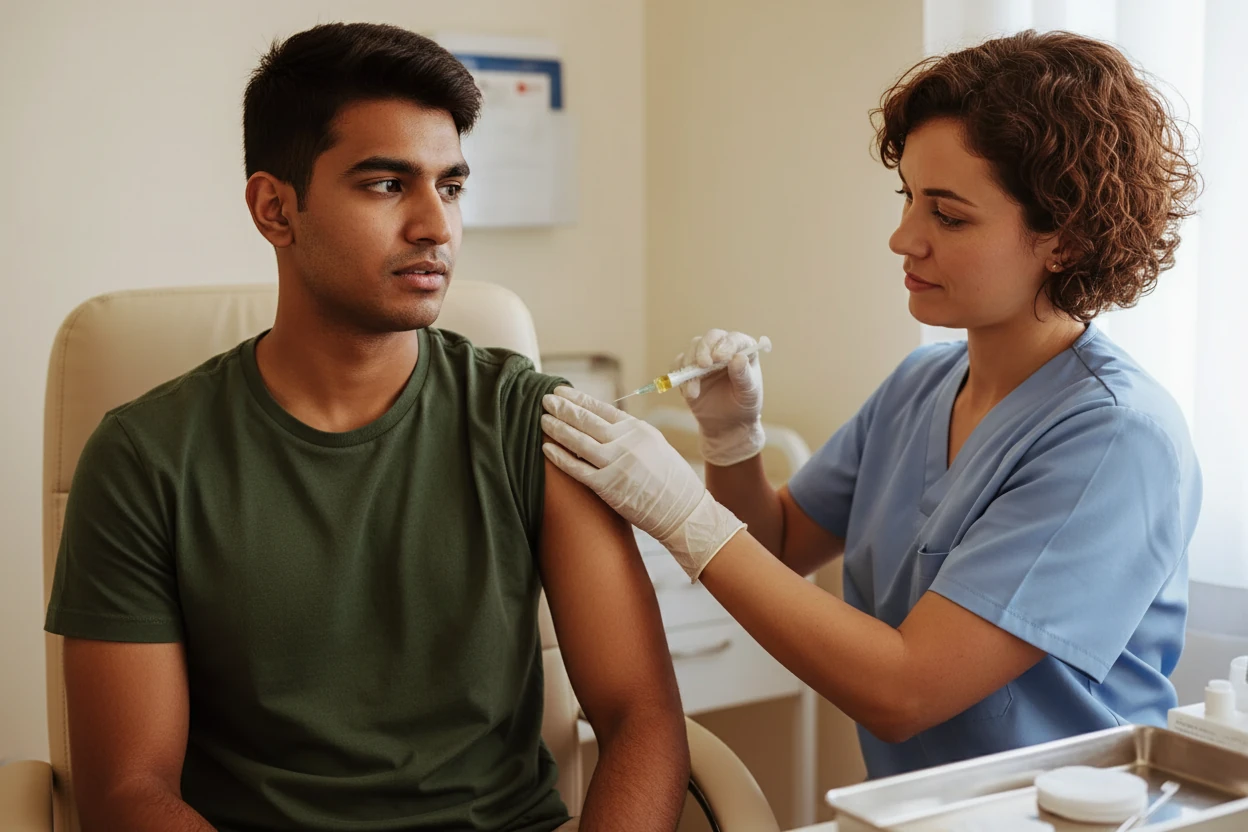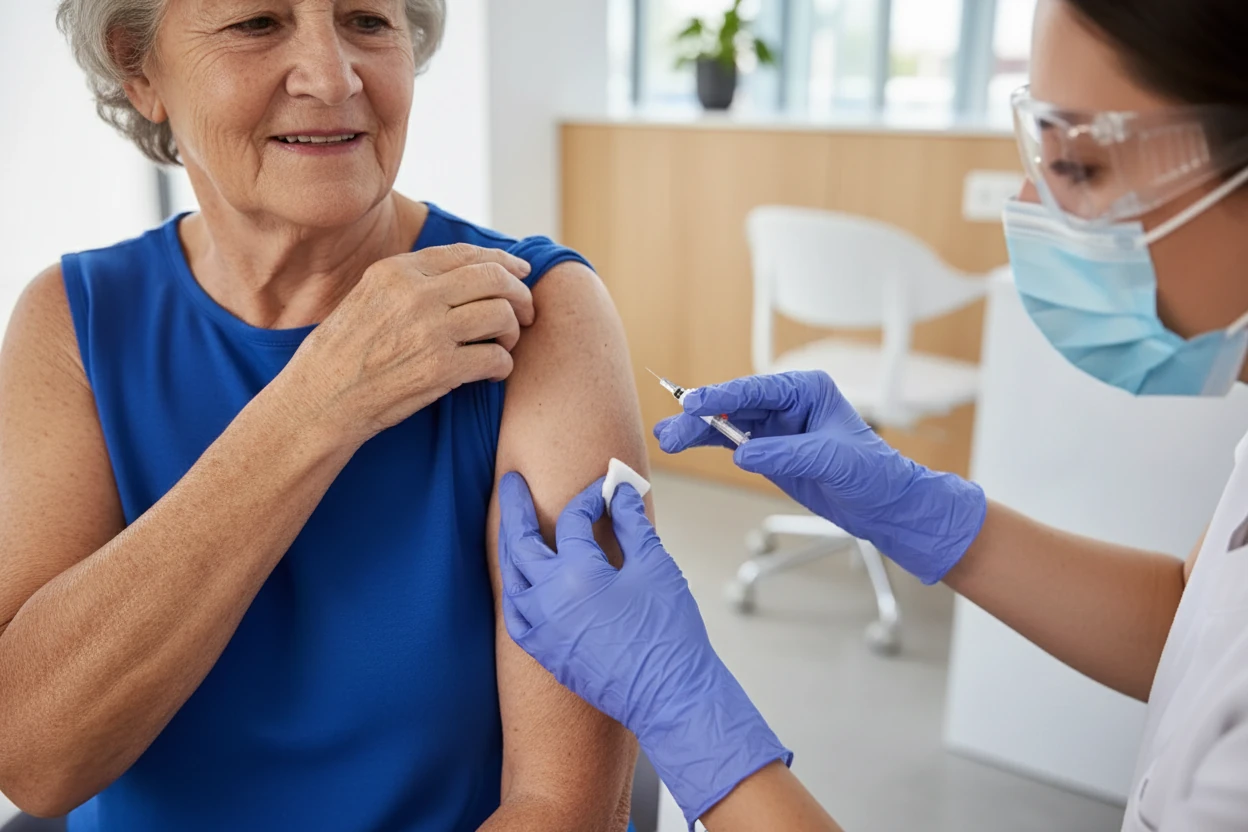
Choosing the correct flu shot needle size and flu shot needle length matters because incorrect needle length is used up to 75% of the time during intramuscular injections, which can affect vaccine delivery and outcomes1. Proper needle length is crucial to ensure vaccines reach the muscle tissue, maximizing immune response and minimizing side effects2. The Centers for Disease Control and Prevention (CDC) has updated guidance recommending longer needles for certain individuals based on weight and gender, and the same intramuscular principles help answer common questions about rabies vaccine needle size for humans and tetanus injection needle size in adults34.
Vaccine Needle Size Guidance for Flu Shots and Other Vaccinations
Intramuscular (IM) injections are the standard method for administering many adult vaccines, including covid-test-accuracy-for-eg5-and-ba286-variants">covid-test-accuracy-for-eg5-and-ba286-variants">COVID-19 vaccines, typically delivered into the deltoid muscle of the upper arm56. The needle must be long enough to penetrate through the skin and subcutaneous fat to deposit the vaccine into muscle tissue, which enhances immune response and reduces local adverse effects such as pain, swelling, and subacromial bursitis72.
The thickness of subcutaneous fat over the deltoid muscle varies widely among individuals, influenced by factors such as body weight and gender8. To optimize vaccine delivery, needle length selection should consider these factors to ensure the vaccine reaches the muscle without causing injury to underlying structures75.
“Needle length is usually 1 to 1.5 inches for adults, but a longer or shorter needle may be needed depending on the patient's weight.”
— Technically Speaking: Choosing the Proper Needle Length for Vaccination6
The CDC and the Advisory Committee on Immunization Practices (ACIP) recommend needle lengths based on adult weight and sex as follows6:
| Weight Category (lbs) | Recommended Needle Length (inches) | Notes |
|---|---|---|
| Less than 130 lbs (60 kg) | 5/8 (16 mm) or 1 | 5/8 inch if skin stretched flat; 1 inch preferred6 |
| 130–152 lbs (60–70 kg) | 1 | Average weight adults |
| Women 152–200 lbs (70–90 kg) | 1–1.5 | Higher body mass women |
| Men 152–260 lbs (70–118 kg) | 1–1.5 | Higher body mass men |
| Women > 200 lbs (90 kg) | 1.5 | Highest body mass women |
| Men > 260 lbs (118 kg) | 1.5 | Highest body mass men |
For adults weighing less than 130 lbs, a 1-inch needle is generally recommended; however, a 5/8-inch needle may be used if the fatty tissue is flattened and the needle is inserted at a 90-degree angle6. Adults with higher body mass require longer needles, ranging from 1 to 1.5 inches, to ensure the vaccine reaches the muscle96. Using a needle that is too short may result in subcutaneous injection, which can reduce vaccine effectiveness and increase local reactions2.
Proper injection technique also plays a critical role in vaccine delivery. The needle should be inserted at a 90-degree angle to the skin, and the injection site should be free of underlying nerves and blood vessels to minimize complications76. The deltoid muscle is the preferred site for adult vaccinations, but the anterolateral thigh can be used as an alternative, especially in individuals with very high body mass6.
- Intramuscular injections require needle penetration through skin and fat to deposit vaccine into muscle5.
- Needle length depends on patient weight and gender to accommodate varying fat thickness8.
- Short needles risk subcutaneous injection, reducing immune response and increasing local reactions2.
- Injection site and angle (90 degrees) are important to avoid injury and ensure proper delivery7.
- The deltoid muscle is the preferred site for adults; the anterolateral thigh is an alternative6.
Flu Shot Needle Size FAQs
Q: What flu shot needle size is recommended for adults?
A: Adult flu shot needle size depends on body weight and the thickness of tissue over the deltoid muscle. Many average-weight adults receive a 1-inch needle, while some adults with higher body mass may need a 1.5-inch needle to ensure the vaccine reaches muscle tissue6.
Q: Does rabies vaccine needle size for humans depend on body weight?
A: For adult intramuscular vaccines, providers typically consider body weight and sex when choosing needle length because the vaccine must pass through skin and subcutaneous fat to reach muscle68. The same principle applies when clinicians choose rabies vaccine needle size for humans in adult patients6.
Q: What tetanus injection needle size is usually used in adults?
A: Adult tetanus injection needle size is chosen using the same CDC intramuscular guidance used for other deltoid vaccines. A 1-inch needle is common for many adults, while longer needles may be needed for higher body weight to achieve proper intramuscular delivery6.
How Needle Length Affects Vaccine Delivery
COVID-19 vaccines remain highly effective in preventing severe illness and hospitalization, especially when administered correctly10. Obesity and higher body mass index (BMI) are known risk factors for severe COVID-19 outcomes, making precise vaccine delivery critical in these populations9. The depth of vaccine injection, influenced by needle length, affects how well the immune system responds to the vaccine72.
While vaccines given with needles shorter than recommended may still provide some immunity, optimal needle length ensures maximal vaccine efficacy by depositing the vaccine fully into muscle tissue9. Partial intramuscular delivery or subcutaneous injection can still stimulate an immune response but may result in reduced effectiveness and increased local adverse events79.
“Healthcare providers should consider patient weight when selecting needle length to optimize vaccine administration.”
— Chhabria & Stanford, Vaccine, 20229
Healthcare providers are encouraged to assess patient weight and select needle length accordingly to optimize vaccine administration5. Patients should also feel empowered to discuss needle size with their providers to ensure proper technique9.
Injection technique, including needle length and site selection, influences both vaccine effectiveness and the rate of adverse events such as pain, swelling, and injection site reactions2. Adjustments in technique may be necessary when needle length options are limited to ensure intramuscular delivery7.
- Maximizes immune response by ensuring vaccine reaches muscle tissue9.
- Minimizes local adverse reactions such as pain and swelling2.
- Reduces risk of subacromial bursitis and other injection site complications7.
- Improves vaccine effectiveness in populations with higher BMI or obesity9.
- Enhances patient confidence and adherence through communication about needle size5.