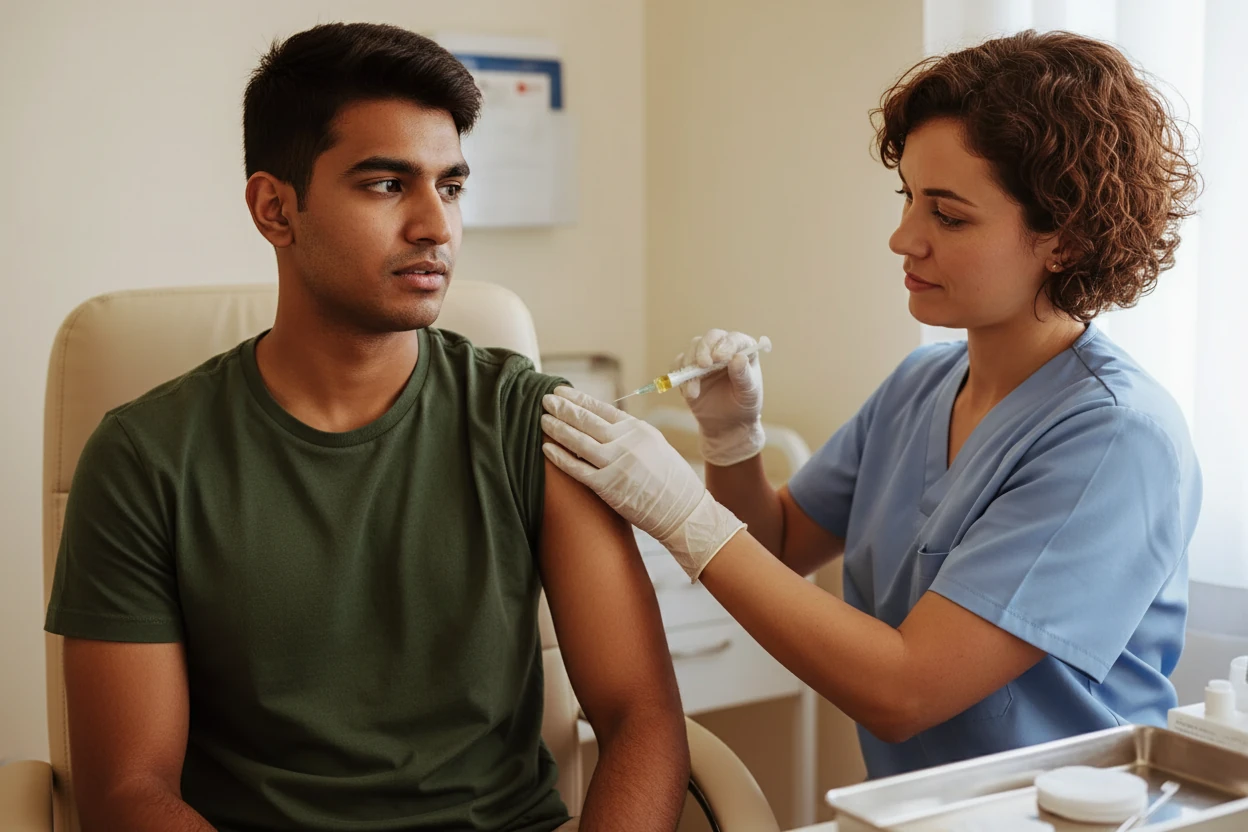
Despite widespread use of COVID-19 vaccines, concerns about rare adverse events continue to arise. Recently, the CDC and FDA identified a preliminary safety signal suggesting a possible link between the Pfizer-BioNTech bivalent COVID-19 booster and ischemic heart-disease-risk-in-womenheart-attack-symptoms-in-womenheart-attack-symptoms-quick-recognition-saves-livesheart-attack-and-stroke-riskstroke in adults aged 65 and older1. However, extensive studies have not confirmed an increased risk, and health officials maintain that the benefits of vaccination outweigh potential risks2. Ongoing surveillance and transparent communication remain key to ensuring public trust and vaccine safety3.
Pfizer Bivalent Booster: Safety Signal Prompts Federal Investigation
In early 2023, the CDC and FDA announced that their Vaccine Safety Datalink (VSD) system detected a preliminary safety signal for ischemic stroke (IS) in individuals aged 65 years and older who received the Pfizer-BioNTech bivalent COVID-19 booster14. This signal suggested a possible increase in ischemic stroke risk within the first 21 days post-vaccination compared to days 22 to 4254. Importantly, this signal was not observed with the Moderna bivalent booster or in other safety monitoring systems14.
Subsequent large-scale retrospective cohort studies using extensive U.S. electronic health record databases found no increased hazard of ischemic stroke after Pfizer bivalent booster administration. Some analyses even reported reduced hazard ratios, such as an HR of 0.54 in the 1–21 days post-vaccination period compared to monovalent vaccines6789. A slight increase in nonhemorrhagic stroke risk was noted in a subgroup receiving concomitant influenza vaccination with the Pfizer bivalent booster during days 22–42 post-vaccination (incidence rate ratio 1.20), though this finding requires further investigation1.
Other surveillance data from the Centers for Medicare and Medicaid Services, Department of Veterans Affairs, and the Vaccine Adverse Event Reporting System (VAERS) did not corroborate the initial safety signal14. Pfizer and BioNTech have stated that current evidence does not support a causal association between their COVID-19 vaccines and ischemic stroke1.
Federal officials emphasize that safety signals often represent statistical anomalies or coincidences rather than true clinical risks. They continue to investigate potential confounding factors that might contribute to observed signals13. The CDC and FDA plan to review accumulating data and discuss findings at upcoming advisory committee meetings, which will also address future COVID-19 vaccine policy1011.
Key points about the safety signal:
- The VSD detected a preliminary signal for ischemic stroke in adults 65+ after Pfizer bivalent booster13.
- No similar signals were found with Moderna bivalent booster or other surveillance systems14.
- Large retrospective studies found no increased ischemic stroke risk; some showed reduced risk6789.
- A slight increased risk was observed when Pfizer bivalent booster was given with influenza vaccine in a specific timeframe1.
- Ongoing investigations aim to clarify whether the signal reflects a true risk or coincidence311.
“Although the totality of the data currently suggests that it is very unlikely that the signal represents a true clinical risk, we believe it is important to share this information with the public, as we have in the past, when one of our safety monitoring systems detects a signal.”
— CDC and FDA statement4
COVID-19 Vaccine Monitoring Systems: How Safety Signals Are Detected
The detection of the preliminary ischemic stroke safety signal demonstrates that vaccine safety monitoring systems in the United States are functioning as intended. The Vaccine Safety Datalink (VSD) is a near real-time surveillance system that continuously analyzes health data from over 12 million patients across multiple integrated healthcare organizations312. This large network allows for the early detection of rare adverse events following vaccination.
The VSD uses statistical thresholds to identify potential safety signals that warrant further epidemiological study. When a signal is detected, it triggers rapid-response investigations including chart reviews, trend analyses, and queries of other safety systems to validate findings312. This multi-layered approach helps distinguish true vaccine-related risks from coincidental events or confounding factors.
Other complementary safety monitoring systems include the Vaccine Adverse Event Reporting System (VAERS) and data from the Centers for Medicare and Medicaid Services and the Department of Veterans Affairs14. These systems provide additional data sources to confirm or refute signals detected by the VSD.
💡 Did You Know? 💡
"Meaning: There is no evidence from these results that the Pfizer bivalent booster is associated with increased hazard for ischemic stroke."13
Vaccine safety signals are common but often found to be coincidental rather than causal. Continuous weekly data analysis and prompt investigation enable federal agencies to respond rapidly to any potential safety concerns, thereby protecting public health3.
Features of the vaccine safety monitoring systems:
- VSD covers over 12 million patients from multiple healthcare organizations3.
- Continuous weekly data analysis facilitates early detection of safety signals3.
- Statistical thresholds trigger further epidemiological investigations3.
- Multiple complementary systems cross-validate safety signals (e.g., VAERS, Medicare data)14.
- Systems are designed to identify and evaluate signals to protect public health3.
CDC & FDA: Health Officials Continue Recommending COVID-19 Boosters
“Staying up-to-date with vaccines is the most effective tool we have for reducing death, hospitalization, and severe disease from COVID-19.”
— CDC official2
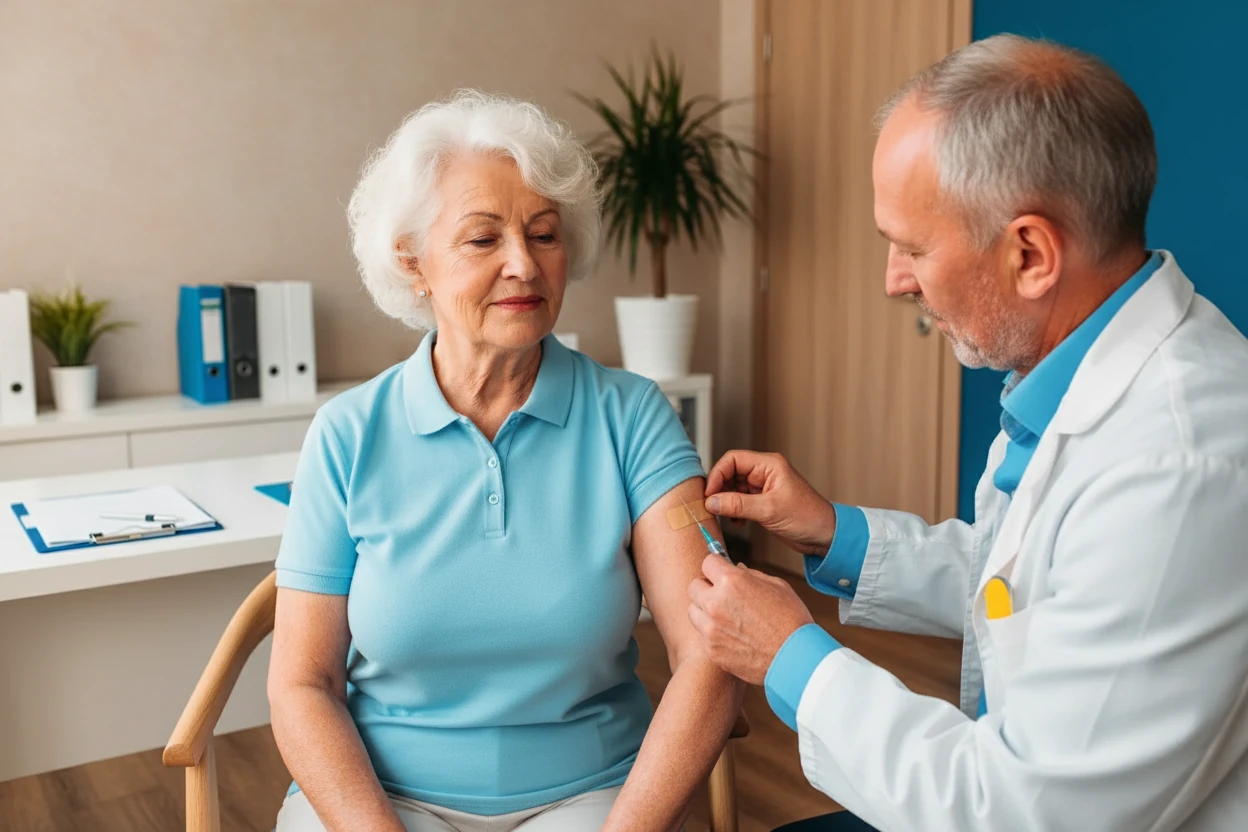
Despite the initial safety signal, health officials and experts continue to recommend COVID-19 booster vaccinations for eligible populations, including adults aged 65 and older. The CDC recommends that everyone aged 6 months and older stay up-to-date with COVID-19 vaccination, including receiving updated bivalent boosters to maintain protection against emerging variants and severe disease214.
Multiple studies have demonstrated that the updated bivalent COVID-19 vaccines significantly reduce the risk of hospitalization and death from COVID-19. For example, receiving an updated booster reduces hospitalization risk nearly threefold and death risk nearly nineteenfold compared to unvaccinated individuals2. International data also show more than 80% protection against severe disease and death from the bivalent vaccine compared to those unvaccinated215.
Reasons health officials recommend COVID boosters:
| Booster Type | Ischemic Stroke Risk in Adults 65+ | Source(s) |
|---|---|---|
| Pfizer Bivalent Booster | No increased risk; some studies show reduced hazard (HR 0.54) | 6789 |
| Moderna Bivalent Booster | No safety signal detected | 14 |
| Monovalent Booster | Baseline comparator | 678 |