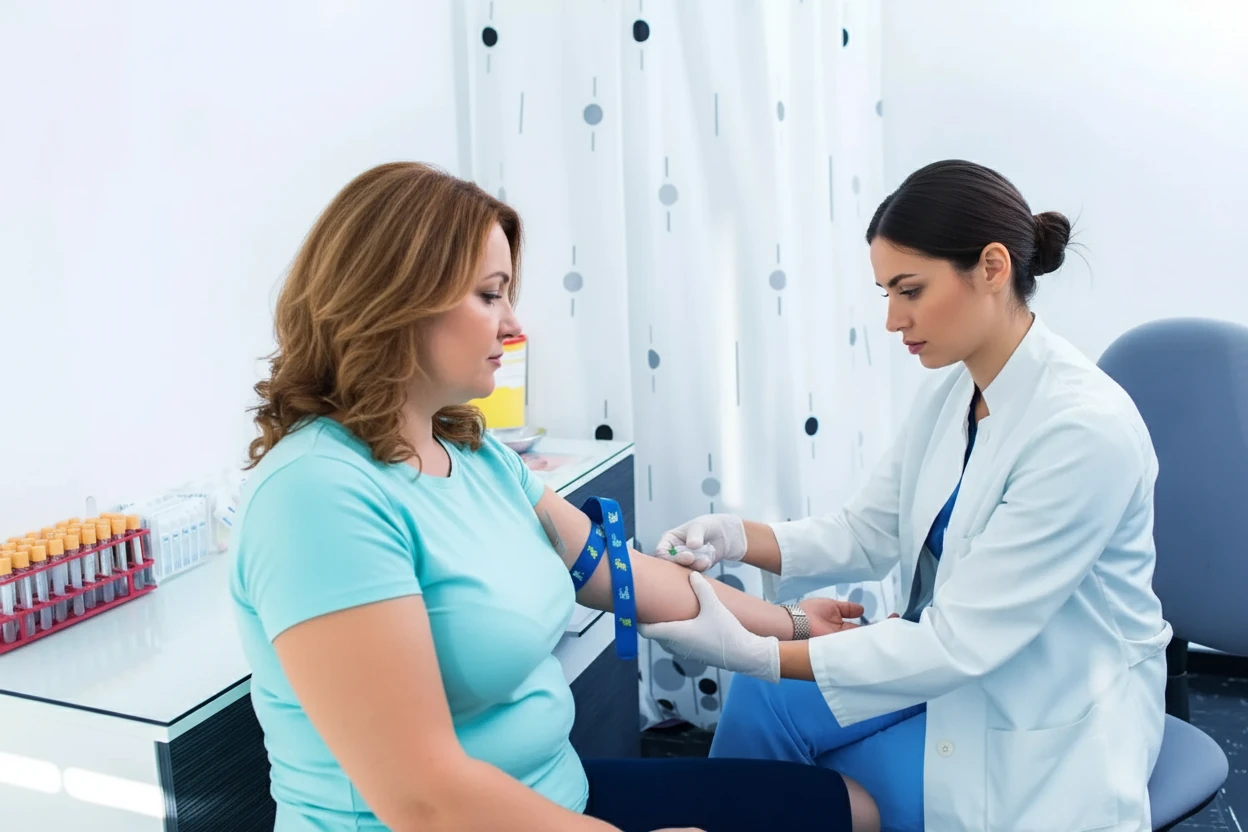
Anxiety disorders affect a significant portion of the adult population, with nearly one in five adults experiencing these conditions during their lifetime12. Early identification and management of anxiety can improve health outcomes and reduce the burden of untreated mental health issues2. Routine screening for anxiety is increasingly recognized as an essential part of comprehensive health assessments, especially for adults under 65, including pregnant and postpartum persons34.
Mental Health Statistics in the United States
Anxiety disorders are among the most common psychiatric conditions in the United States, with a lifetime prevalence estimated at approximately 20% among adults12. National data from 2001 to 2002 reported lifetime prevalence rates of 26.4% for men and 40.4% for women, indicating a higher burden among females4. Anxiety disorders typically begin in childhood or early adulthood, and symptoms tend to decline with age4. However, the COVID-19 pandemic caused a significant global increase in anxiety and depression-7-helpful-choices">depression-reliefdepression-reliefdepression, with a 25% rise in prevalence, highlighting the widespread impact on mental health56.
Anxiety disorders often co-occur with other medical and psychiatric conditions, compounding their clinical importance7. If left untreated, these disorders can cause substantial functional impairment and economic burden8. Despite their high prevalence, anxiety disorders frequently go unrecognized in primary care settings, leading to substantial delays in diagnosis and treatment initiation, sometimes spanning decades19. This under-recognition contributes to ongoing morbidity and reduced quality of life for many affected individuals2.
Risk factors for anxiety disorders include family history of mental health conditions, presence of other mental health disorders, stressful life events, smoking, alcohol use, and marital status such as being widowed or divorced4. Women and Black individuals are also at increased risk4. Anxiety disorders encompass a range of conditions, including generalized anxiety disorder (GAD), social anxiety disorder, panic disorder, separation anxiety disorder, phobias, selective mutism, and anxiety not otherwise specified4.
How Anxiety Screening Would Work
The United States Preventive Services Task Force (USPSTF) recommends routine screening for anxiety disorders in adults aged 64 years or younger, including pregnant and postpartum persons who do not have a diagnosed mental health disorder and are not showing symptoms of anxiety410. This recommendation is based on evidence that screening tools can accurately identify anxiety disorders and that early detection facilitates timely intervention411.
Screening typically involves brief, validated self-report questionnaires that can be administered in primary care settings by clinicians or medical assistants1213. Common tools include the Generalized Anxiety Disorder 7-item scale (GAD-7), the Edinburgh Postnatal Depression Scale (EPDS) anxiety subscale, and the Geriatric Anxiety Inventory (GAI) for older adults121415. The GAD-7 is widely used due to its ease of use and strong diagnostic accuracy. A score of 8 or greater on the GAD-7 is considered a reasonable cut-point to identify probable cases of generalized anxiety disorder, warranting further diagnostic assessment15.
Screening is intended for asymptomatic individuals or those unaware of their anxiety symptoms, helping to uncover clinically significant anxiety that might otherwise be overlooked or normalized213. Positive screening results should lead to comprehensive clinical evaluation and, if appropriate, referral for evidence-based treatment such as psychotherapy or pharmacotherapy411. Screening may be repeated periodically or targeted to high-risk individuals based on clinical judgment and risk factors124.
- Routine screening tools:
- Generalized Anxiety Disorder 7-item scale (GAD-7)15
- Edinburgh Postnatal Depression Scale (EPDS) anxiety subscale4
- Geriatric Anxiety Inventory (GAI) for older adults14
- Screen for Adult Anxiety Related Disorders (SCAARED)16
- Screening process:
- Administer brief questionnaire in primary care12
- Positive screen triggers further diagnostic assessment4
- Referral to specialized care if needed12
- Periodic or targeted re-screening based on risk12
“When screening for anxiety disorders, a score of 8 or greater represents a reasonable cut-point for identifying probable cases of generalized anxiety disorder; further diagnostic assessment is warranted to determine the presence and type of anxiety disorder.”
— Robert L. Spitzer, Columbia University15
Barriers to Anxiety Treatment After Diagnosis
While screening can identify individuals with anxiety disorders, significant barriers often prevent timely and effective treatment. Less than half of those with mental illness receive mental health care, and follow-up after positive screening is frequently delayed or incomplete in many healthcare settings91718. For example, only about 32% of veterans who screened positive for anxiety received timely follow-up care within three months1917.
“The USPSTF recommends screening for anxiety disorders in adults, including pregnant and postpartum persons.”
— US Preventive Services Task Force11
Key barriers to treatment include financial constraints, provider shortages, and systemic inequities, particularly affecting underserved communities and racial and ethnic minorities9184. Cost is a leading obstacle, with 41% of individuals reporting it as a barrier to engaging in mental health treatment920. Structural factors such as lack of integration between mental health and primary care services further hinder access and coordination of care1812.
Stigma and normalization of anxiety symptoms also contribute to under-treatment, as patients may hesitate to seek help or disclose symptoms218. Additionally, misdiagnosis and disparities in mental health service utilization are more common among Black and Hispanic/Latino patients compared with White patients214. These challenges underscore the need for improved systems to support screening, diagnosis, and treatment linkage.
- Barriers to treatment:
- Financial constraints and cost of care918
- Shortage of mental health providers18
- Systemic inequities and racial disparities214
- Stigma and normalization of anxiety symptoms2
- Poor integration of mental health into primary care12
Benefits of Routine Anxiety Screening
Routine anxiety screening in adults under 65 offers several benefits by enabling early identification and intervention, which can improve health outcomes and reduce the long-term burden of anxiety disorders24. Early detection allows for timely treatment with evidence-based therapies such as cognitive behavioral therapy and pharmacotherapy, which have demonstrated moderate to small-to-moderate benefits in reducing anxiety symptoms11.
Integrating mental health screening into standard primary care reduces stigma, promotes acceptance, and normalizes mental health care as part of routine health maintenance2223. This approach supports comprehensive health assessments and aligns with best practice standards for preventive care323. Screening also helps identify anxiety disorders that co-occur with other medical and psychiatric conditions, facilitating holistic patient management7.
“The USPSTF concludes with moderate certainty that screening for anxiety disorders in adults, including pregnant and postpartum persons, has a moderate net benefit.”
— US Preventive Services Task Force4
Although evidence is limited regarding the optimal frequency of screening, a pragmatic approach involves screening adults who have not been previously screened and using clinical judgment to determine the need for additional screening based on risk factors and life events4. Special consideration is given to pregnant and postpartum persons, where ongoing assessment during the perinatal period is recommended4.
| Screening Tool | Sensitivity | Specificity | Notes |
|---|---|---|---|
| GAD-7 (cutoff ≥8) | 92%15 | 76%15 | Effective for GAD, also screens for panic, social anxiety, PTSD |
| GAD-2 (pregnant persons, cutoff ≥1) | 100%4 | 60%4 | High sensitivity, lower specificity |
| SCAARED (score ≥23) | N/A | N/A | Screens for DSM-5 anxiety disorders16 |
- Benefits of routine screening:
- Early identification and treatment improves outcomes24
- Reduces stigma and normalizes mental health care22
- Facilitates detection of comorbid conditions7
- Supports comprehensive preventive health assessments3
- Enables targeted re-screening based on risk factors4