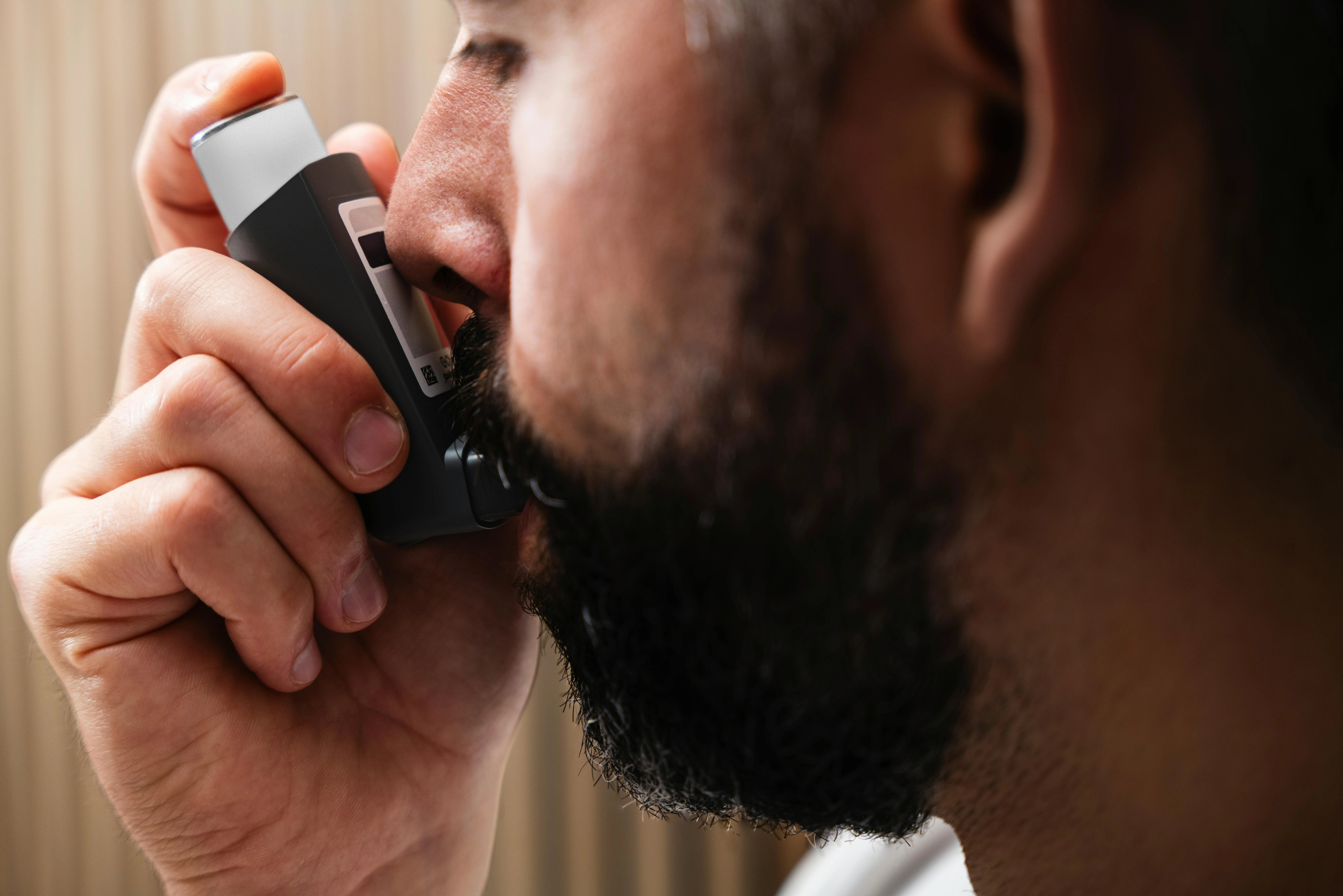
Asthma is a chronic lung disease that causes inflammation and narrowing of the airways, making breathing difficult1. While many people are diagnosed with asthma in childhood, adult-onset asthma can develop at any age, often with different characteristics and risk factors2. Adult-onset asthma tends to be more severe and persistent, with a faster decline in lung function compared to childhood asthma3. Understanding its symptoms, causes, and treatment options is essential for effective management and improved quality of life.
Symptoms of Adult-Onset Asthma
Adult-onset asthma shares many symptoms with childhood asthma but often presents with a distinct symptom profile4. Common signs include:
- Wheezing, a whistling sound during breathing, is a characteristic symptom in adults5.
- Nighttime cough is frequently reported and can disrupt sleep5.
- Shortness of breath and chest tightness or pain are common6.
- Coughing, especially at night, during exercise, or when laughing, may occur7.
- Patients may notice a drop in peak flow meter readings if monitored6.
Prolonged respiratory infections or colds can worsen or mimic asthma symptoms in adults, complicating diagnosis and management5. Adults with asthma may also experience difficulty performing physical activities due to breathing limitations6.
Adult-onset asthma symptoms often overlap with childhood asthma but tend to be more persistent and severe. Nighttime cough and wheezing are key indicators to watch for in adults.45
Causes of Adult Asthma
The exact cause of adult-onset asthma remains incompletely understood, as it is a heterogeneous disease with multiple contributing factors5. Known risk factors and triggers include:
- Environmental exposures such as allergens (e.g., pollen, dust mites) and irritants like smoke, fumes, and chemical vapors5.
- Hormonal fluctuations in women, including changes during pregnancy or menopause-treatment-options-and-managementmenopause-link-to-alzheimers-higher-risk-in-womenmenopause-treatment-options-and-managementmenopause, increase asthma risk8.
- Respiratory infections can trigger or worsen asthma symptoms5.
- Obesity is both a comorbid condition and a trigger factor for adult-onset asthma3.
- Air pollution is a recognized environmental risk factor5.
- Gastroesophageal reflux disease (GERD) and other digestive disorders are common comorbidities that may exacerbate symptoms9.
Occupational exposures are also significant, with occupational asthma accounting for 9–15% of adult-onset cases in industrialized countries3.
“It is unknown what exactly causes adult-onset asthma. However, certain known risk factors are associated with chronic inflammatory states, such as obesity and exposure to environmental triggers.”
— Rabab Nasim, Rush University System for Health1
Adult vs. Childhood Asthma Differences
Adult-onset asthma differs from childhood asthma in several important ways, including etiology, severity, and prognosis5. The following table summarizes key differences:
| Feature | Childhood Asthma | Adult-Onset Asthma |
|---|---|---|
| Typical Age of Onset | Before 6 years | 20 years or older |
| Sex Predominance | Male > Female | Female > Male |
| Genetic Influence | Strong | Less clear |
| Allergic Association | Common | Less common, often non-allergic |
| Severity | Generally milder | Often more severe |
| Lung Function Decline | Slower | Faster |
| Common Triggers | Viral infections, allergens | Obesity, smoking, hormones, irritants |
| Treatment Approach | Controller + reliever meds | Similar, with more frequent use of biologics in severe cases |
Adult-onset asthma is often non-atopic (not caused by allergies), has a lower remission rate, and is associated with a faster decline in lung function and more severe airflow limitation3. It predominantly affects women and is less likely to improve over time compared to childhood asthma103. Childhood asthma is more influenced by genetic factors and early-life exposures such as viral infections and tobacco smoke119.
“Asthma that starts in adulthood differs from childhood-onset asthma in that it is often non-atopic, more severe, and associated with a faster decline in lung function.”
— Selma B. de Nijs, Academic Medical Centre and University of Amsterdam3
Diagnosing Adult-Onset Asthma
Diagnosing asthma in adults involves a thorough medical history and physical examination, focusing on symptom patterns and risk factors12. Unlike childhood asthma, adult-onset asthma diagnosis requires careful differentiation from other respiratory conditions due to overlapping symptoms13.
Standard diagnostic tools include:
- Spirometry to assess airflow limitation and reversibility12.
- Methacholine challenge tests to evaluate airway hyperresponsiveness12.
- Fractional exhaled nitric oxide (FeNO) testing as a non-invasive marker of eosinophilic airway inflammation12.
- Allergy testing to identify potential triggers12.
- Chest imaging to exclude other lung diseases12.
Adult-onset asthma often presents with more severe symptoms and faster lung function decline, necessitating early and accurate diagnosis to prevent progression5. Certain medications and comorbidities like GERD may complicate diagnosis and management129.
“Early medical evaluation is important for new asthma symptoms in adults to prevent progressive lung function decline and morbidity.1012”
Adult Asthma Treatment Options
Treatment for adult-onset asthma is individualized based on disease severity and presence of comorbidities12. The main goals are to control symptoms, prevent exacerbations, and maintain lung function.
Common treatment options include:
- Short-acting beta-agonists (SABAs) for rapid relief of acute symptoms12.
- Long-acting bronchodilators to maintain airway dilation over time12.
- Anti-inflammatory controller medications, primarily inhaled corticosteroids, for long-term control12.
- Combination inhalers that include both bronchodilators and corticosteroids to improve adherence and symptom control12.
- Systemic corticosteroids for severe exacerbations or uncontrolled asthma12.
- Biologic therapies targeting specific inflammatory pathways, used in severe or refractory cases12.
Lifestyle modifications such as smoking cessation and trigger avoidance are essential components of management12.
Combination inhalers and biologic therapies have improved outcomes for adults with severe asthma, offering targeted control beyond traditional treatments.12
Living With Adult-Onset Asthma
Managing adult-onset asthma requires ongoing monitoring and adherence to treatment plans12. Patients should work closely with healthcare providers to adjust therapy based on symptom control and lung function.
Key strategies for coping include:
- Regular use of prescribed controller medications to reduce airway inflammation12.
- Using bronchodilators as needed for quick symptom relief12.
- Avoiding known triggers such as smoke, allergens, and irritants12.
- Following a personalized asthma action plan to recognize and respond to worsening symptoms12.
- Monitoring lung function with peak flow meters to detect early airway obstruction12.
- Managing comorbid conditions like GERD and obesity to optimize asthma control9.
Adult-onset asthma often has a more severe and persistent course than childhood asthma, making adherence and comprehensive care critical5.
Key Takeaways
- Adult-onset asthma is a chronic lung disease characterized by airway inflammation and narrowing, often more severe and persistent than childhood asthma31.
- Symptoms include wheezing, nighttime cough, shortness of breath, chest tightness, and coughing, frequently worsened by respiratory infections56.
- Causes are multifactorial, involving environmental exposures, hormonal changes, obesity, and respiratory infections, with less genetic influence than childhood asthma985.
- Diagnosis relies on spirometry, allergy testing, FeNO measurement, and clinical evaluation to differentiate from other conditions1213.
- Treatment is personalized and includes bronchodilators, corticosteroids, combination inhalers, and biologics, alongside lifestyle changes and trigger avoidance12.